Stitching Personal and other Pilgrimages at the Walking Assembly
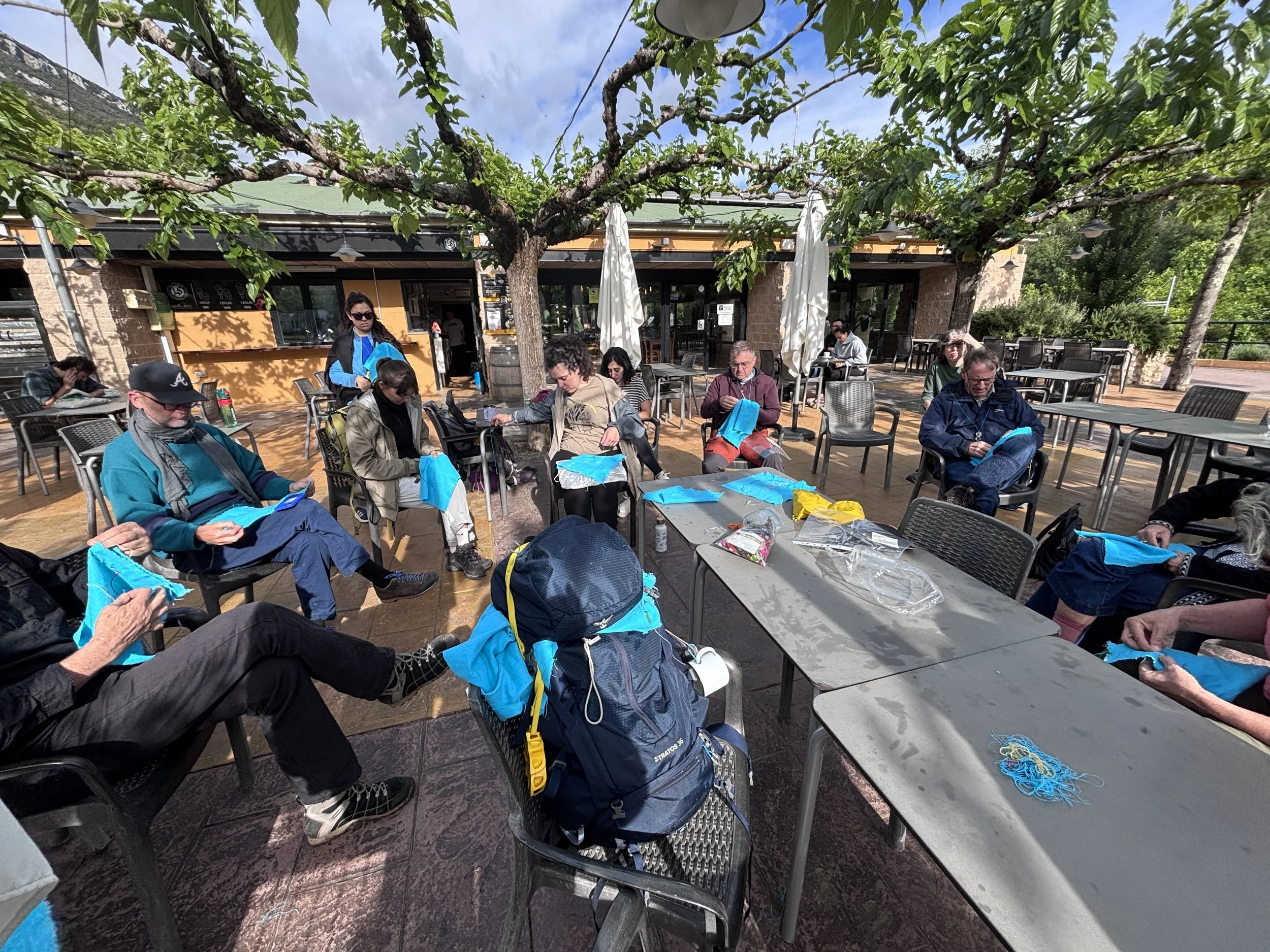
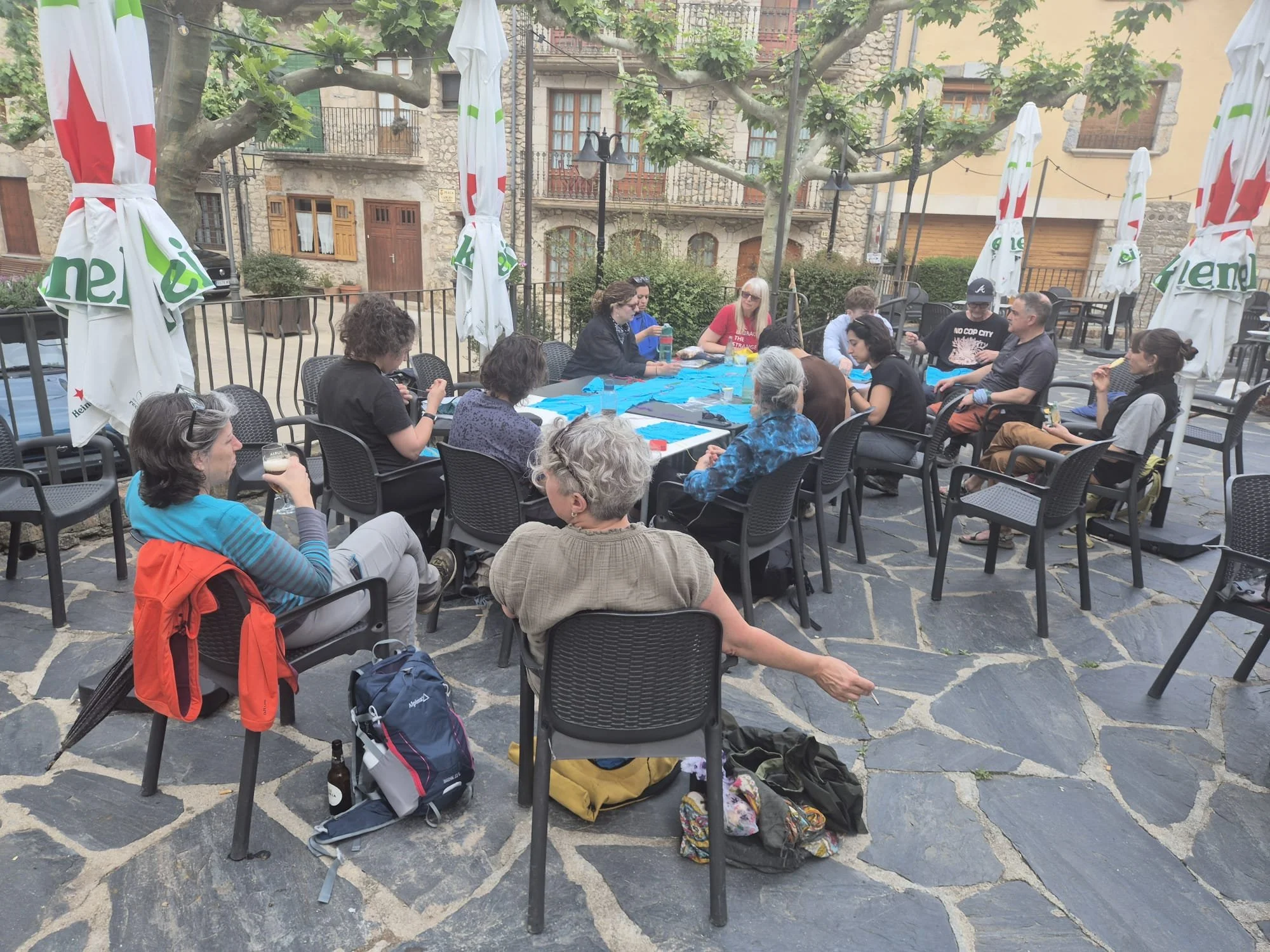
Embroidering the cloth at start of Pilgrimage
The Walking Assembly began in Girona, where I had the pleasure of chairing anthropologist Tim Ingold’s opening lecture, The Valley and the Stream. Drawing on Patrick Geddes’ Valley Section, Tim invited us to think of the river not simply as a landscape to be crossed, but as a living process through which people, places and knowledge are continually shaped. It proved a fitting introduction to the days that followed.
In preparation for the Walking Assembly, my partner, geologist Nick May, and I spent the previous week walking the River Muga from its upper reaches in the eastern Pyrenees to the Mediterranean Sea. This research journey allowed us to develop our own applied Valley Section reading of the river, its communities and histories and became the starting point for the walks we later led during the Assembly.
Together with Nick I led one of the four walkshops in the foothills of the Pyrenees: Personal and Other Pilgrimages. We invited participants to explore the Muga Valley through our applied Valley Section research. We did this through walking, conversation, collecting and embroidery, bringing together art and geology, human time and deep time.
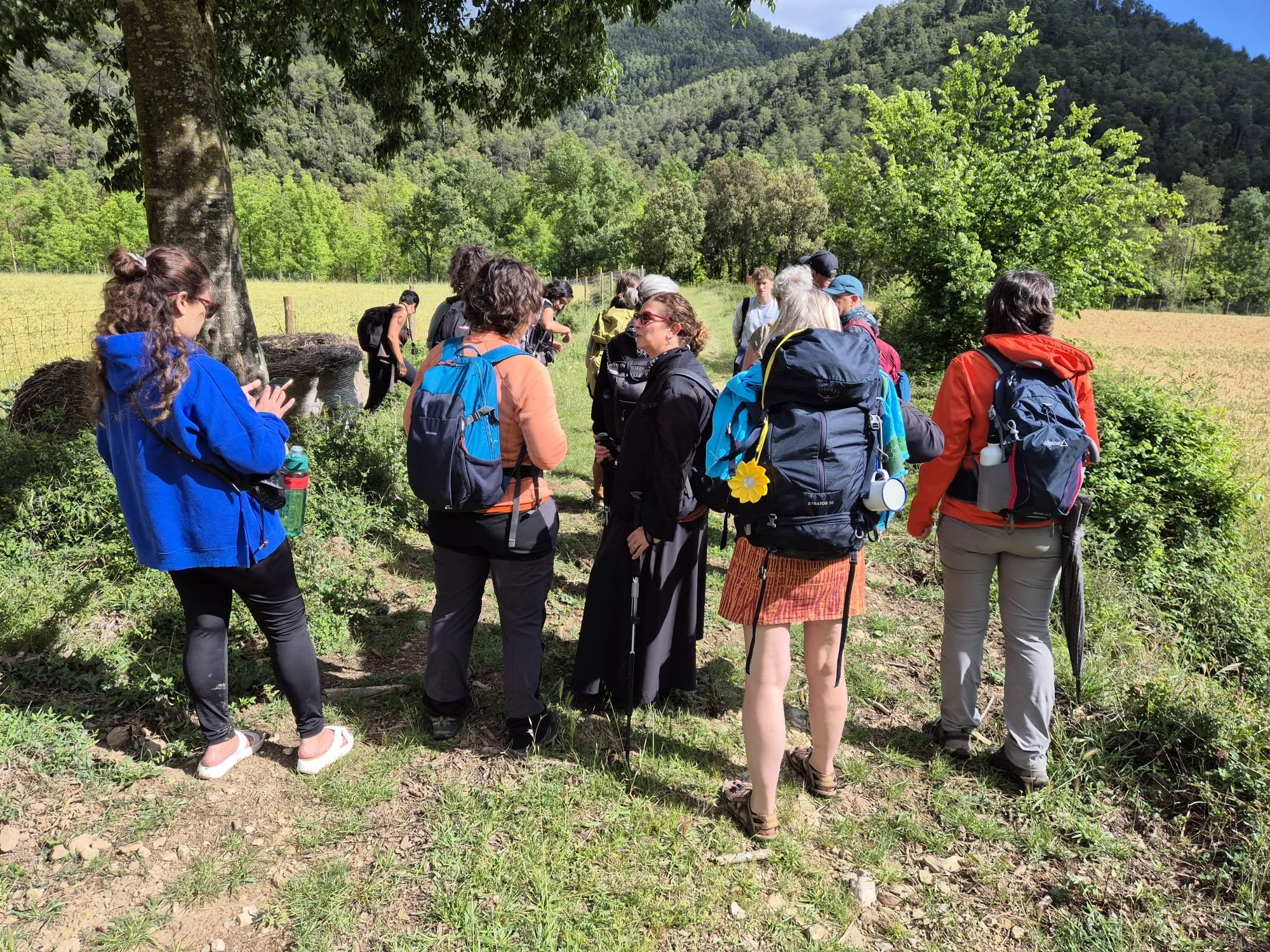
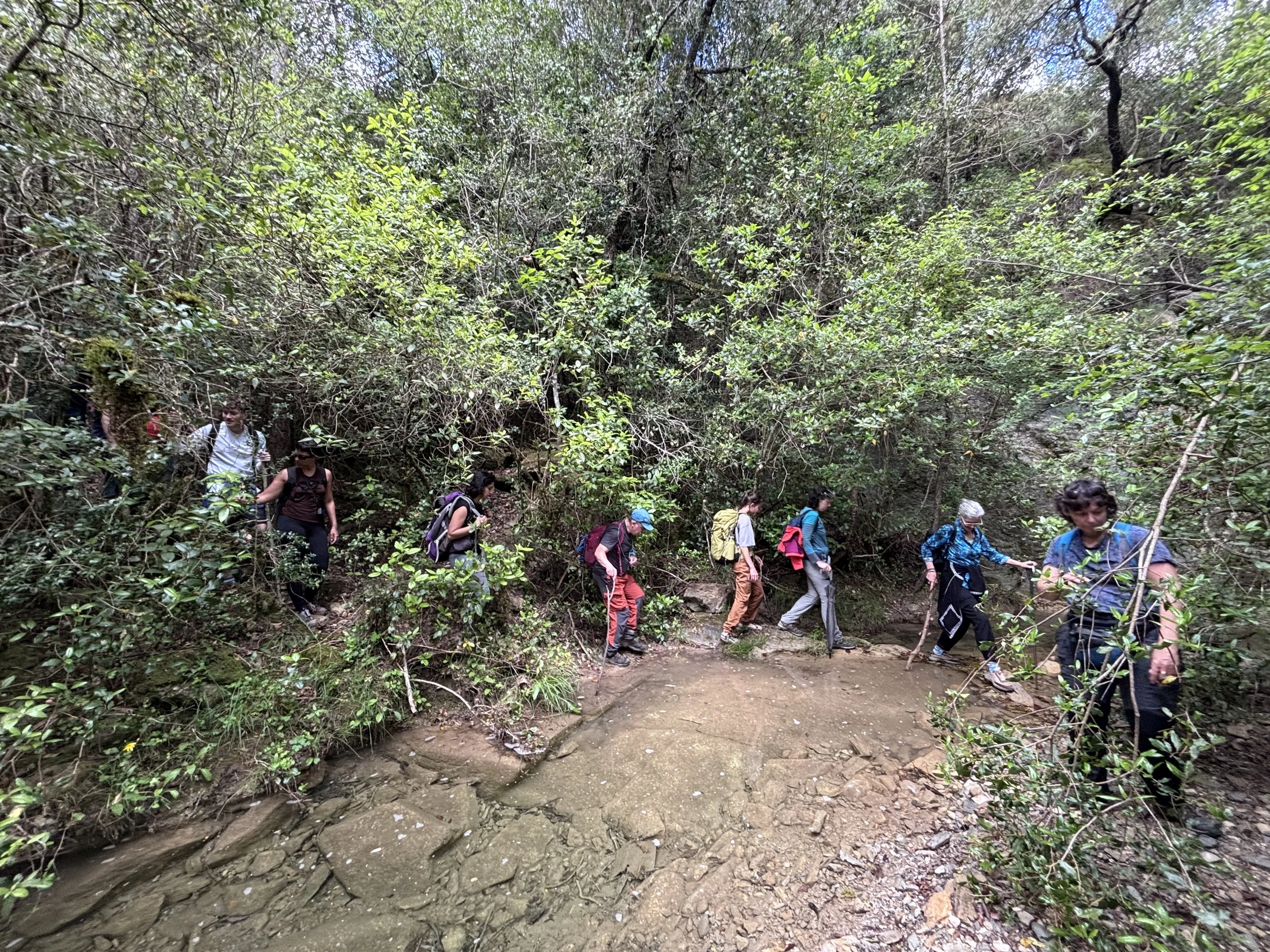
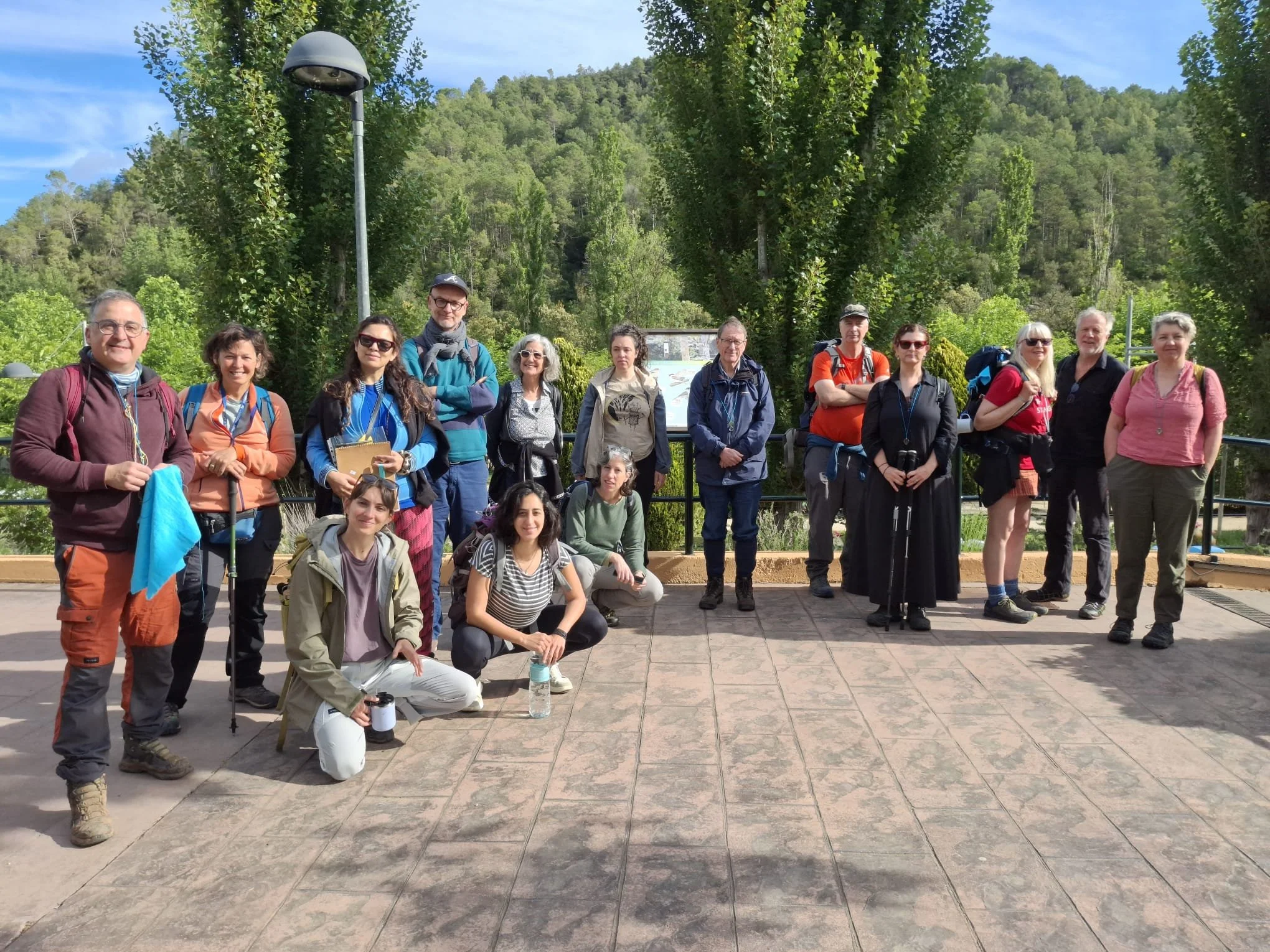
Our group was highly international. Walkers from Australia, Pakistan, Portugal, France, Spain, Catalonia, England, Scotland and the United States came together. Tim Ingold had also travelled by train from Scotland and joined our walk, which began at the Bassegoda campsite. On the first day, we walked up towards the mountains; on the second, we followed the valley down in the direction of the sea.
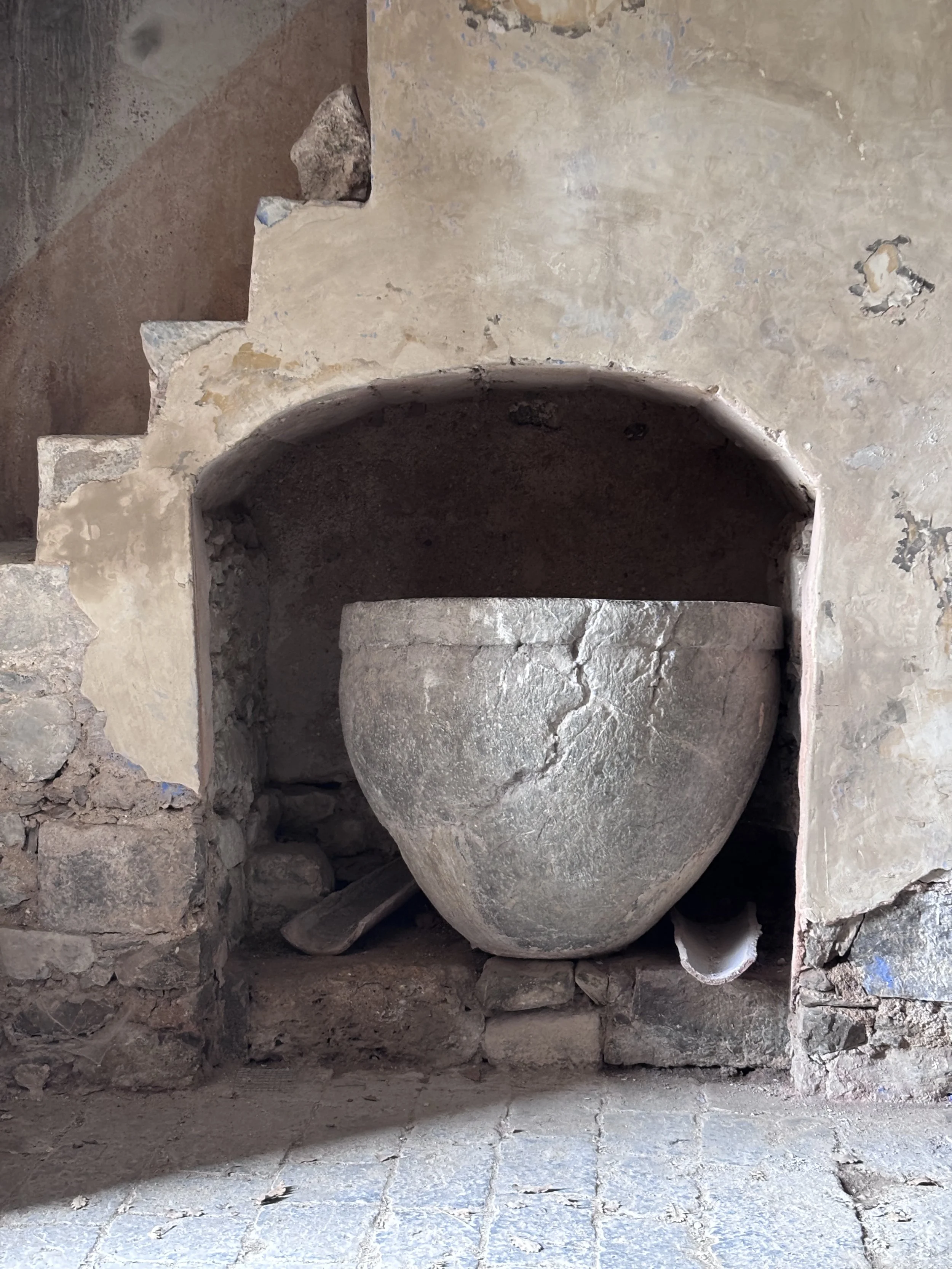
In my walking art practice, I am interested in pilgrimages—both spiritual and personal—and in how the two may overlap. Our destination on the first day was the small church of Sant Bartomeu, reached after a long and relatively strenuous walk in intense heat. Some participants walked in silence, while others found themselves singing in the ruins of the former monastery, where the acoustics transformed simple voices into something unexpectedly beautiful.
By the time we returned to our temporary campsite home that evening, we were somewhat exhausted. As though marking the end of the day’s pilgrimage, the heavens opened and we were caught in torrential rain.
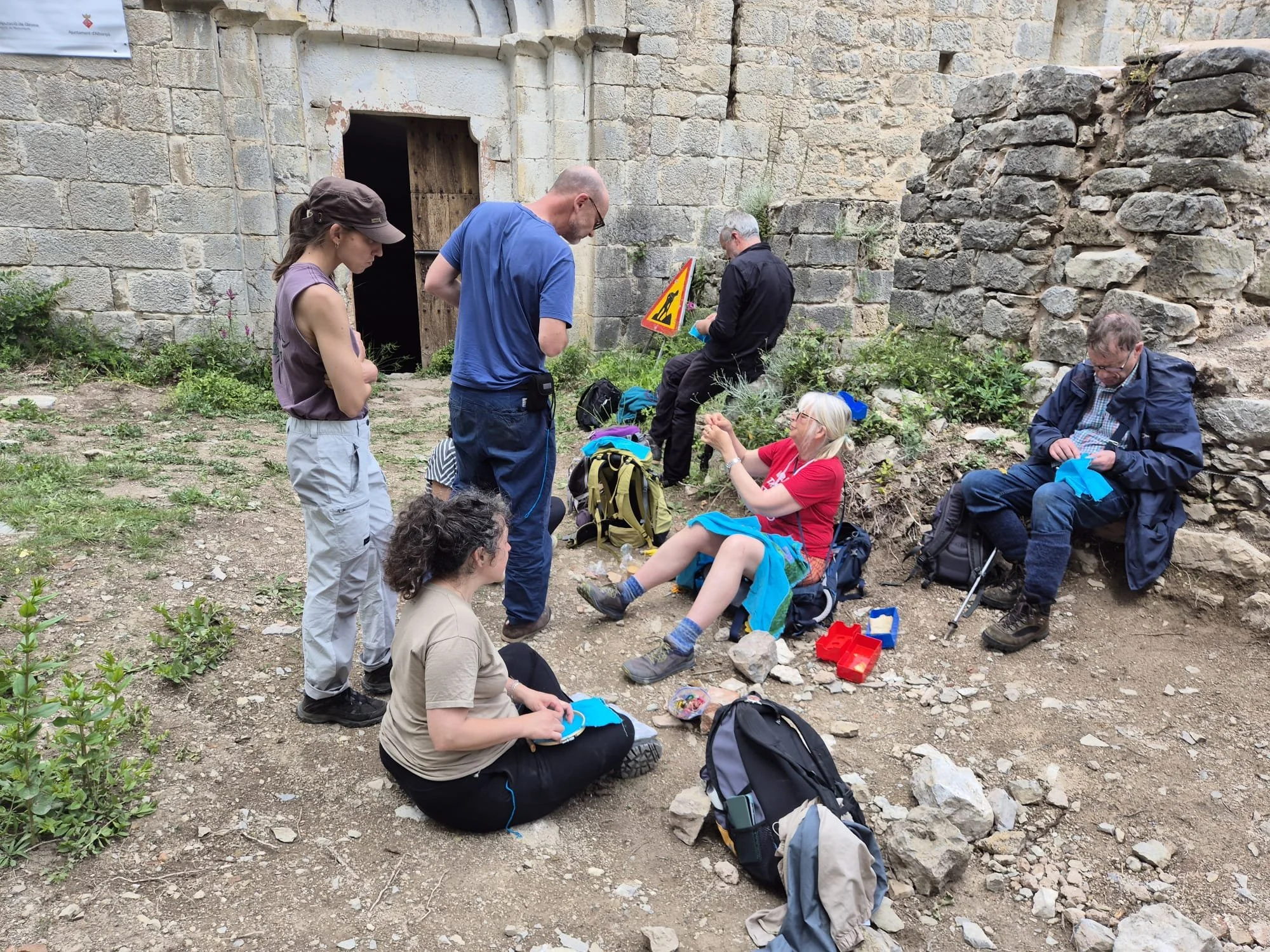
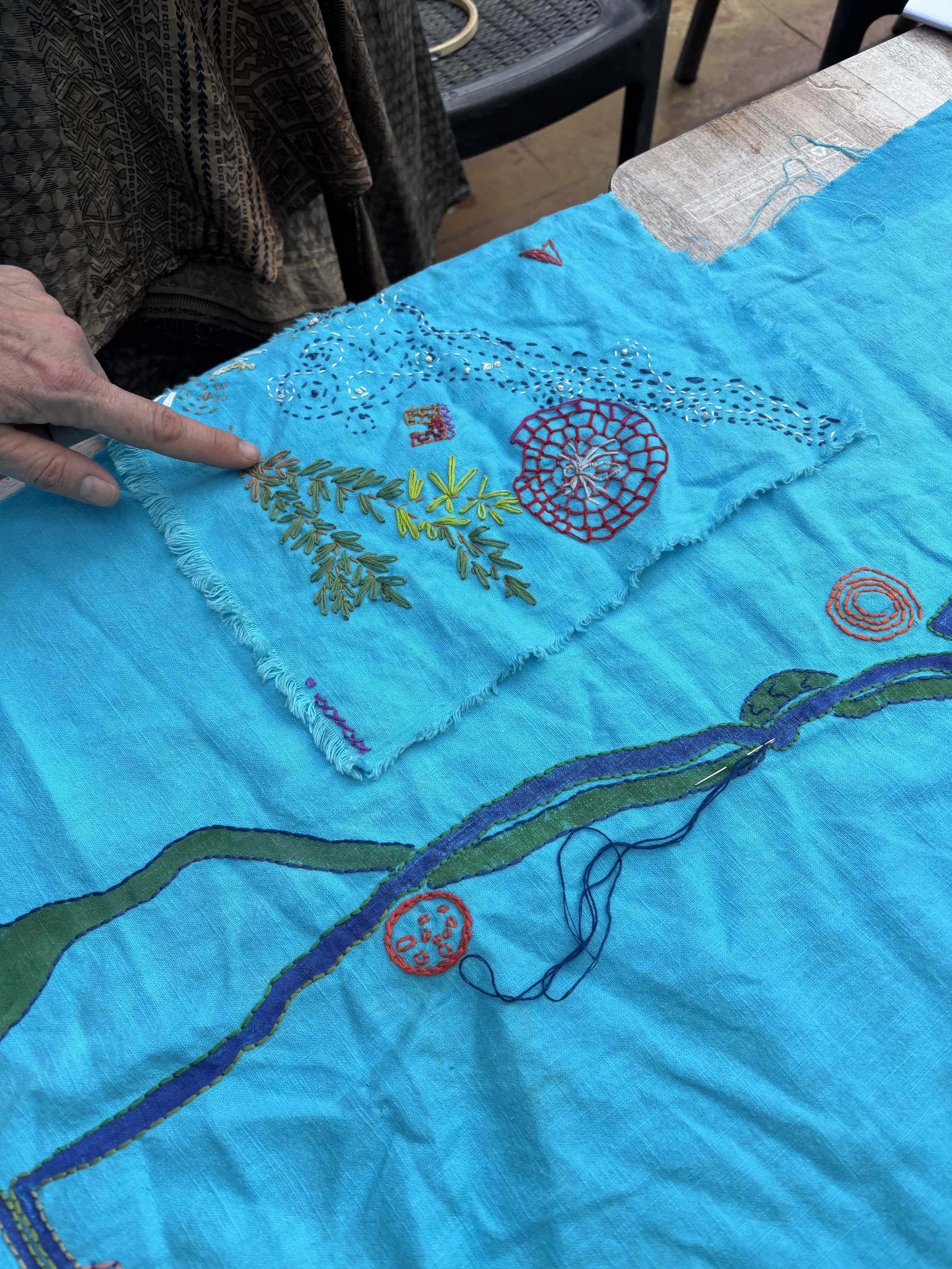
Before setting off, each participant received a square cut from my blue embroidered tablecloth and was invited to stitch their own personal pilgrimage over the two days. Whenever we paused, needles and thread appeared. Some embroidered beside the river, others while resting in the shade, and some even stitched as they walked. The slow rhythm of embroidery became another way of walking, another way of paying attention.
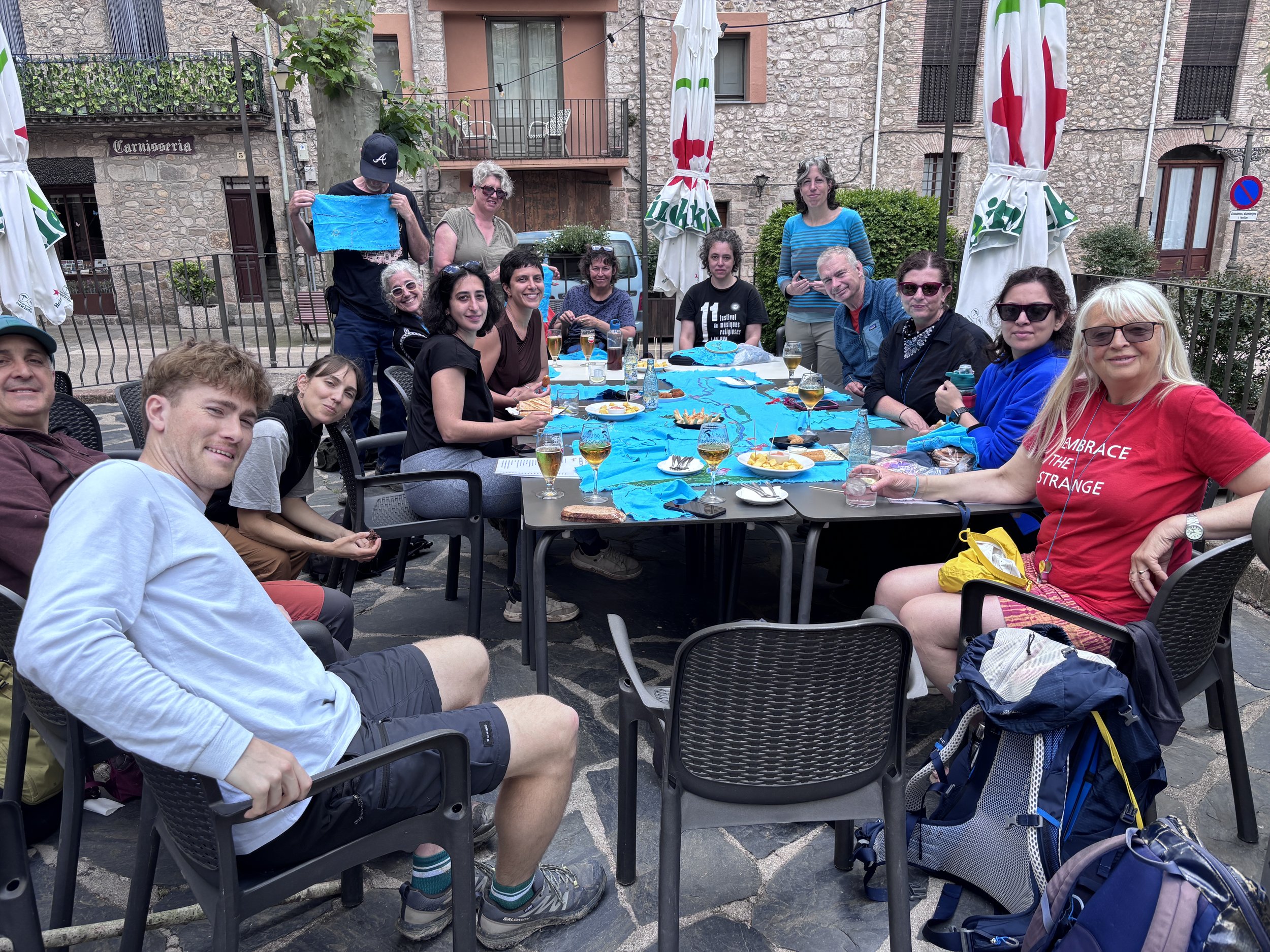
On the second day, we concentrated on the villages and communities of the Muga Valley. Walking through Albanyà and ending in Sant Llorenç de la Muga, we applied my Seven Senses walking technique along the way, observing the places through listening, looking, smelling, balancing, feeling and discussing intuition. Tasting took place at the Societat La Fraternitat, where a generous selection of tapas brought both the walk and the embroidery to a close.
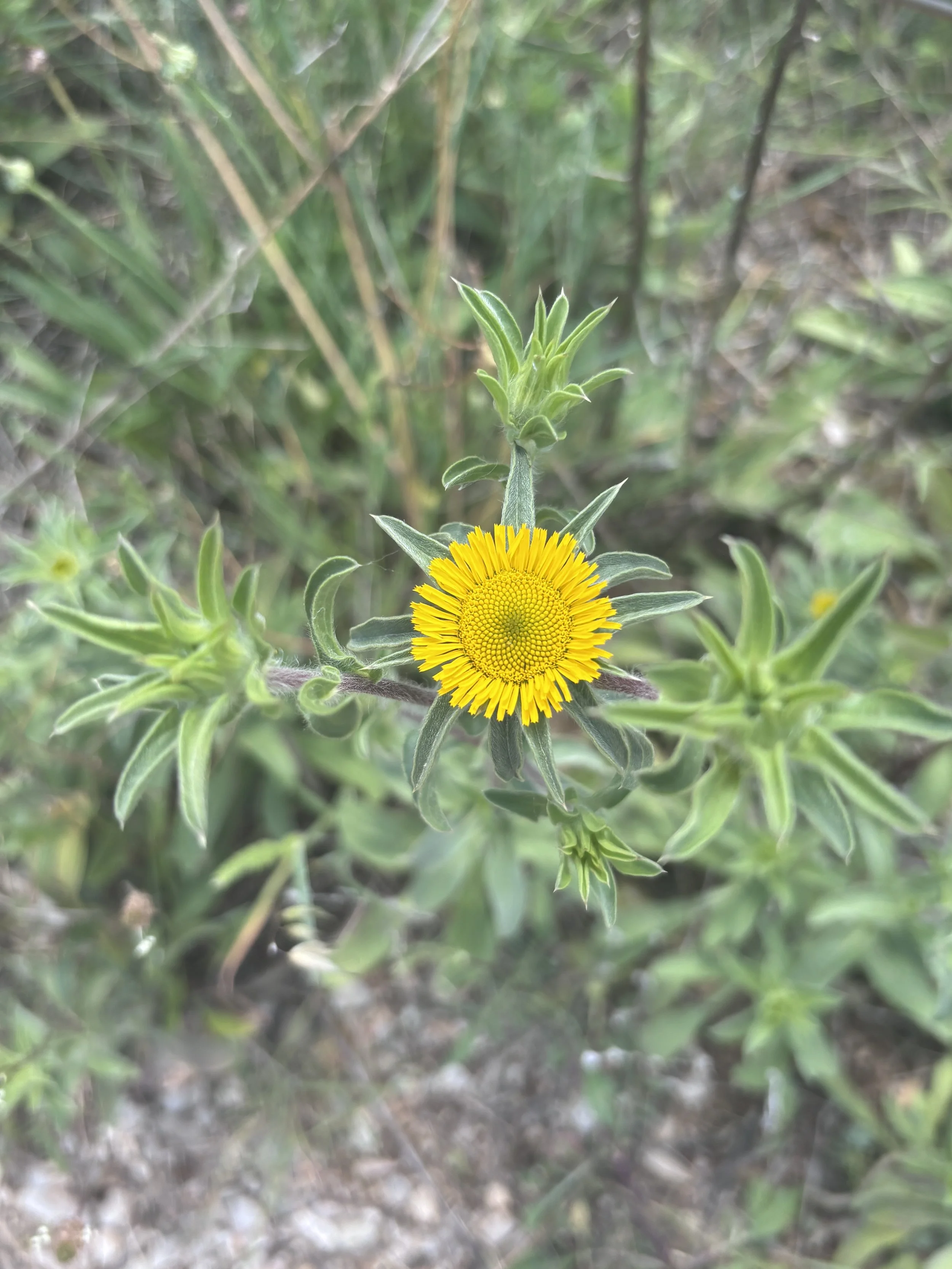
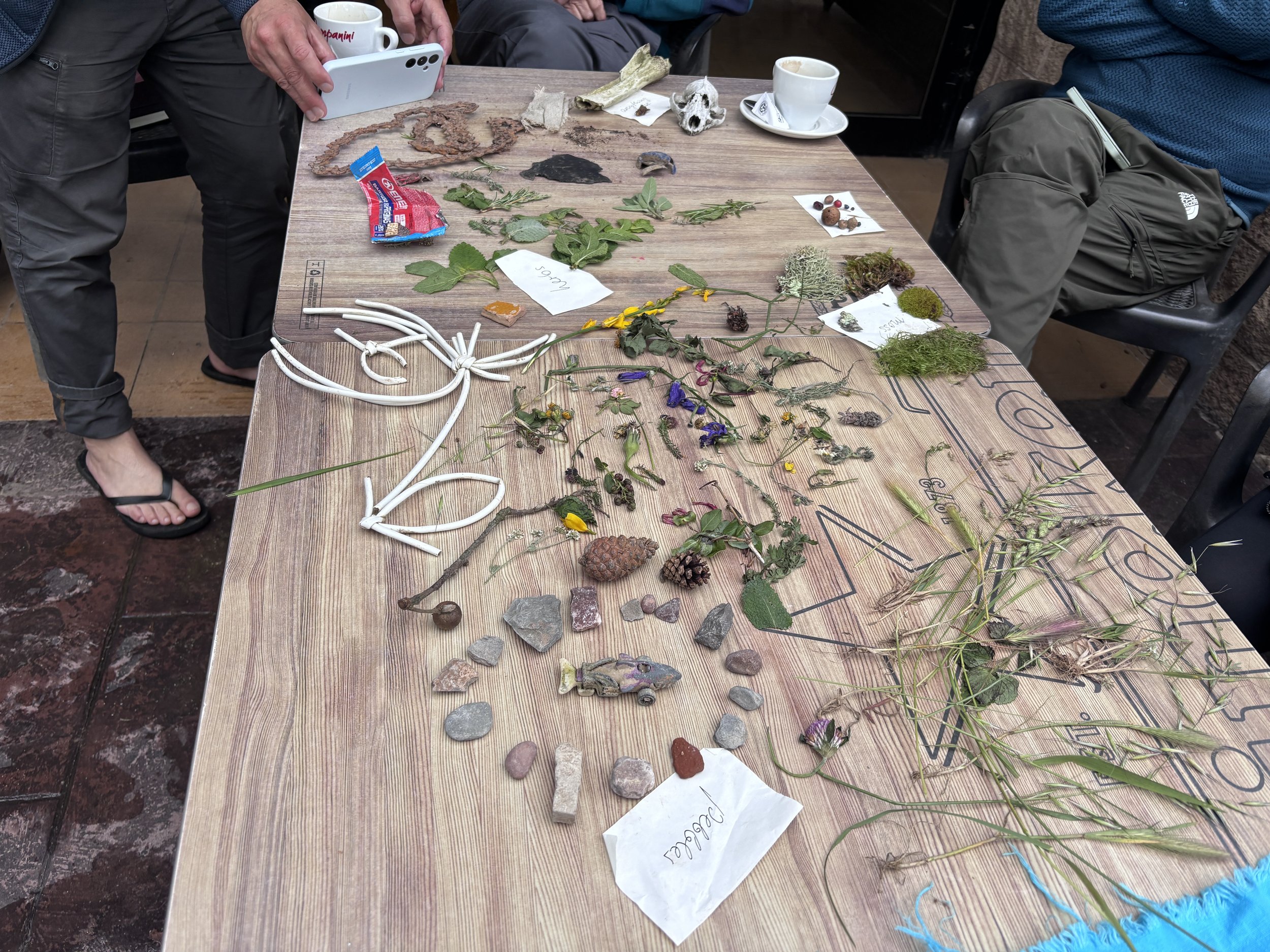
Along the route, everyone found their own way of observing the valley. Carrying small bags, one participant collected moss, another grasses and another herbs, while others gathered stones, feathers or fragments of conversation. Together, these small collections became a collective field study, with each person noticing a different aspect of the landscape.
No single collection could have told the whole story, but together they revealed something of the richness of the Muga Valley. This became one possible answer to the question Clara Garí posed at the beginning: Can we learn without teaching?
Tim Ingold’s lecture stayed with me throughout the Assembly. During the final gathering, his reflections sparked lively discussion. Some found his comments challenging, while others recognised them as an invitation to look beyond ourselves. For me, the conversation echoed the very idea of the Valley Section. A river is made up of many currents, not all flowing in exactly the same direction.
Walking together does not require consensus. It requires sufficient generosity to remain in conversation and to allow different ways of knowing to exist alongside one another.
Someone later described our group as “a rugby team”, which felt very apt. We looked after one another, waited for one another on the climbs, shared food, stories and water, and gradually found our rhythm. The physical challenge of the walk—the steep ascent, the intense heat and the long days—gave it the feeling of a shared pilgrimage, accompanied by a strong sense of camaraderie.
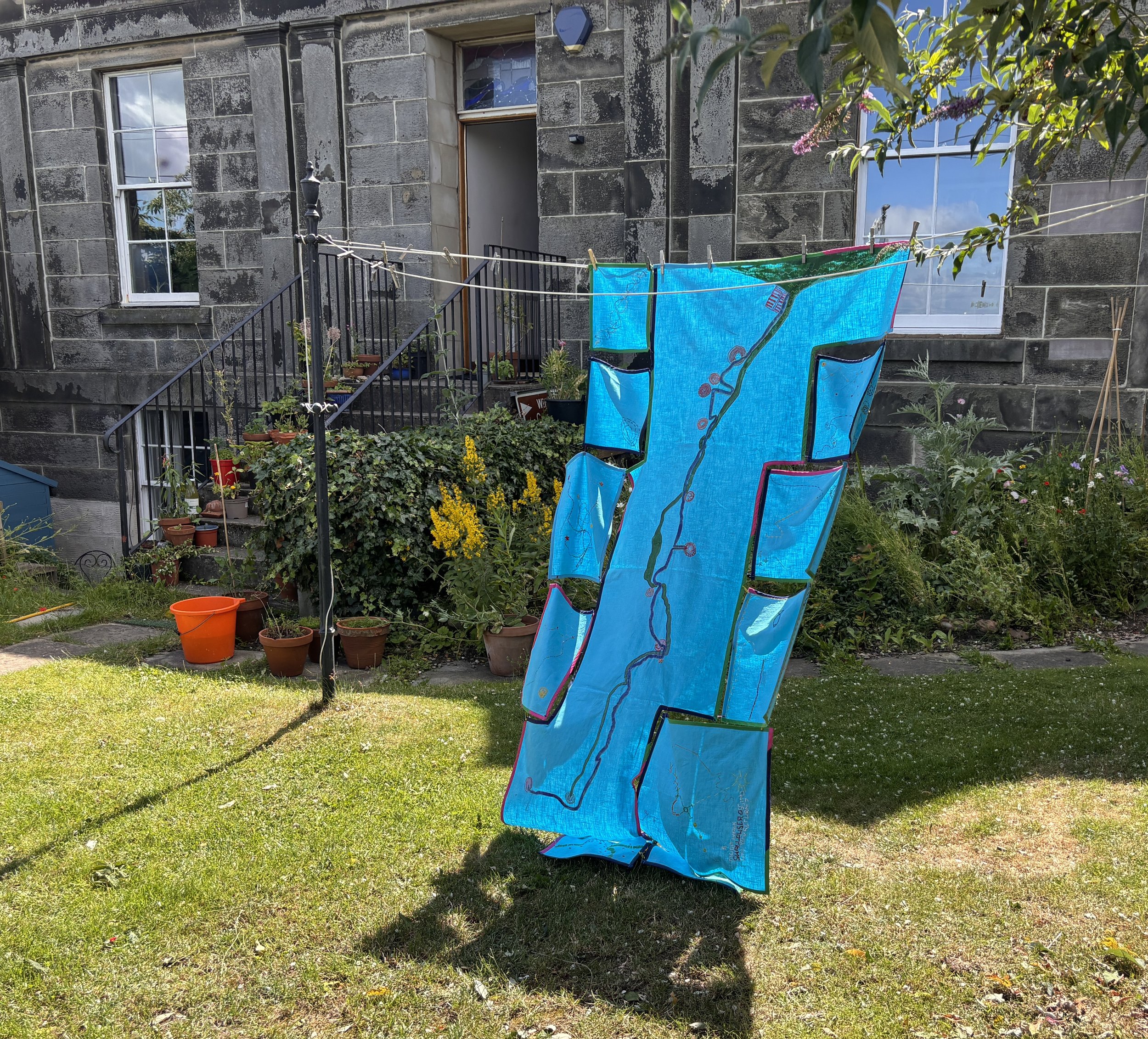
Back home in Edinburgh, the embroidered squares found their way into my work basket. I have since been assembling them back onto the original blue cloth, reconnecting the individual journeys into a shared textile. Each piece carries its own rhythm of attention and its own pilgrimage, yet together they form something that none of us could have created alone. The completed work can function as a single tablecloth or as a central cloth surrounded by individual mats, adapting according to how many people gather around the table.
Perhaps that is what a Walking Assembly is all about: not arriving at the same destination but discovering that our individual paths can be held together within a shared landscape.
Thanks are due to the funders for the opportunity but in particular my collaborators and co-curators Geert Vermeire, Luce Joules, Pau Cata and especially Clara Garì who carried the bulk of the organisational burden.