Walking the Muga Valley Section
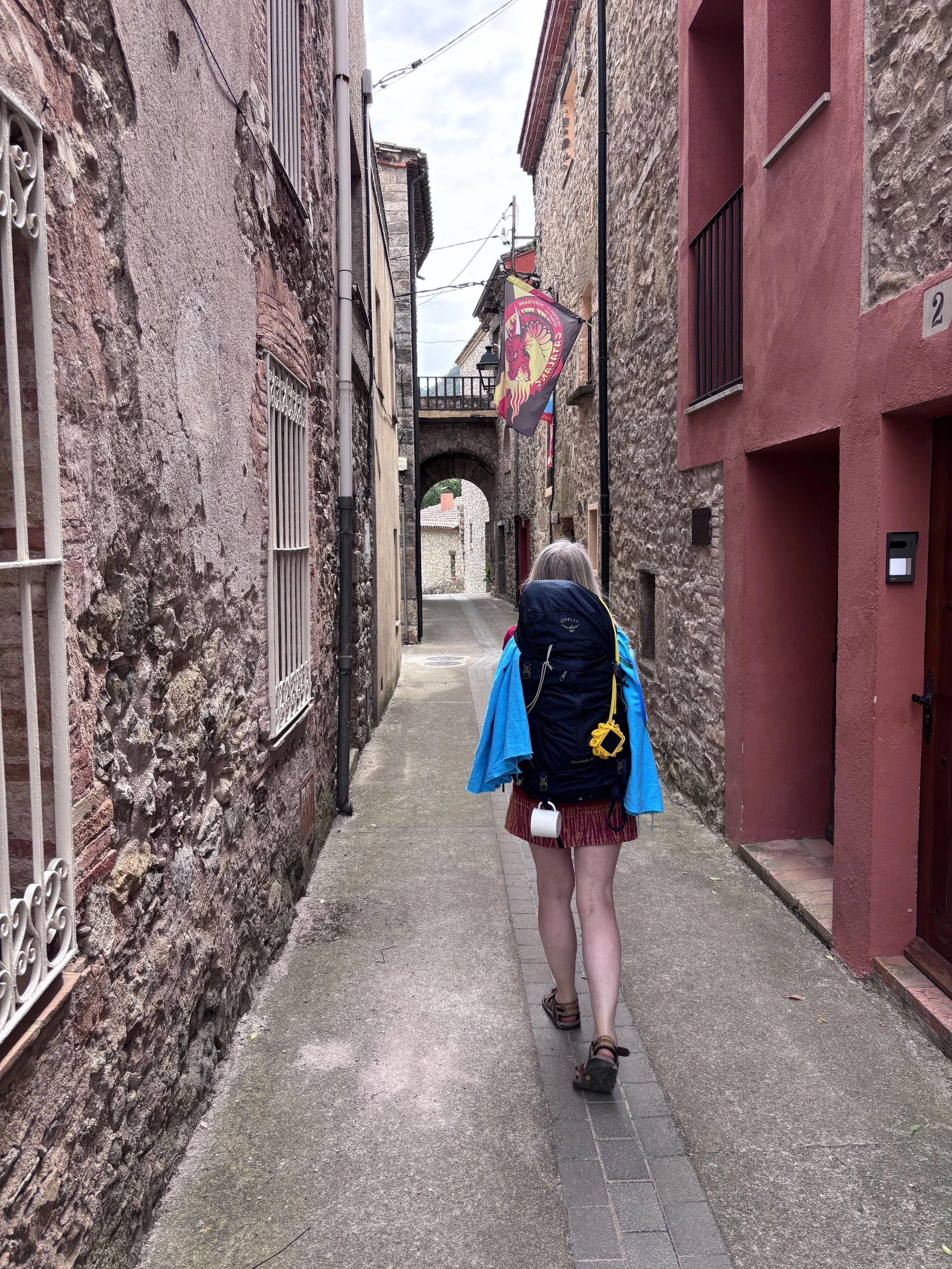
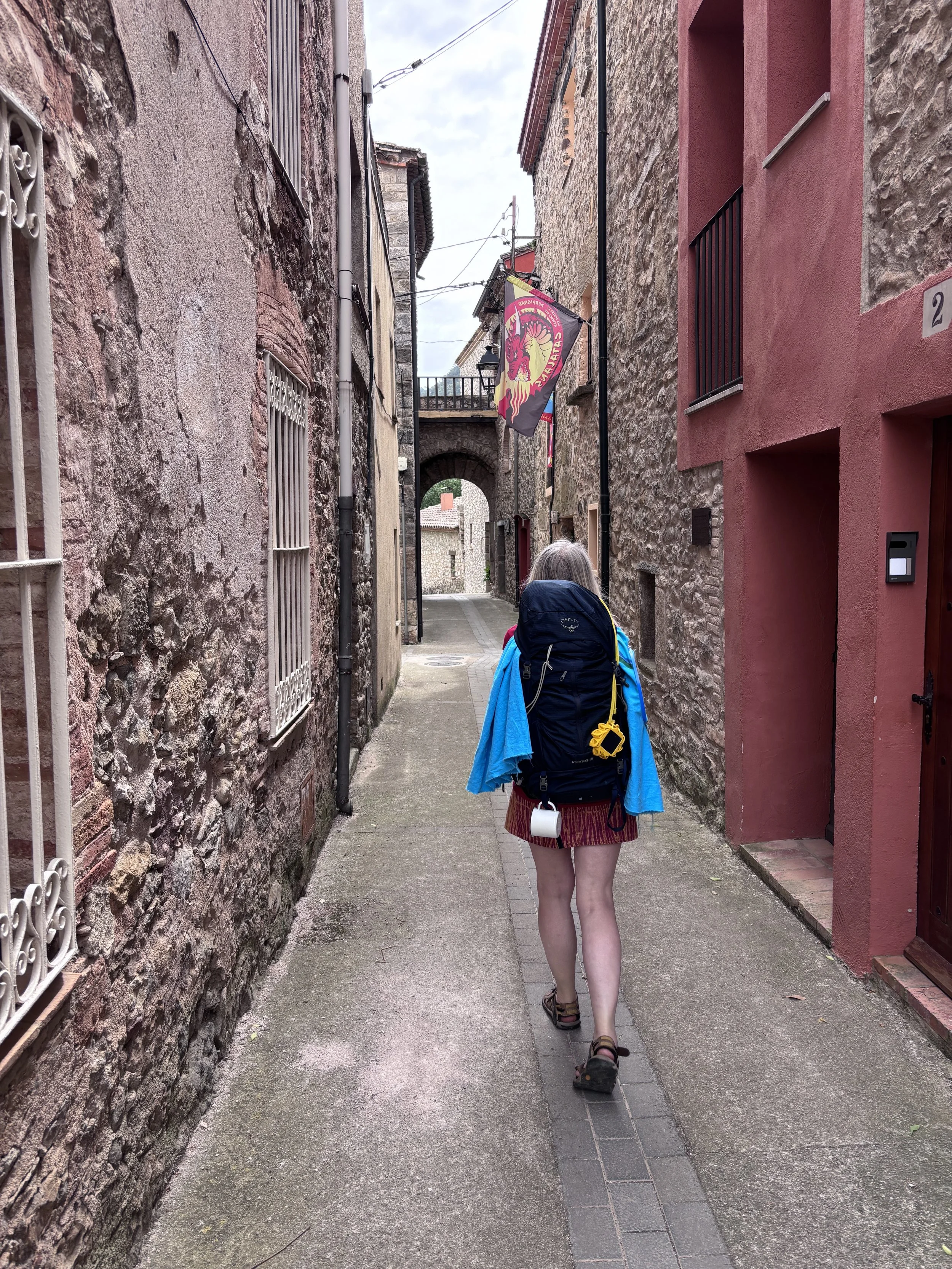
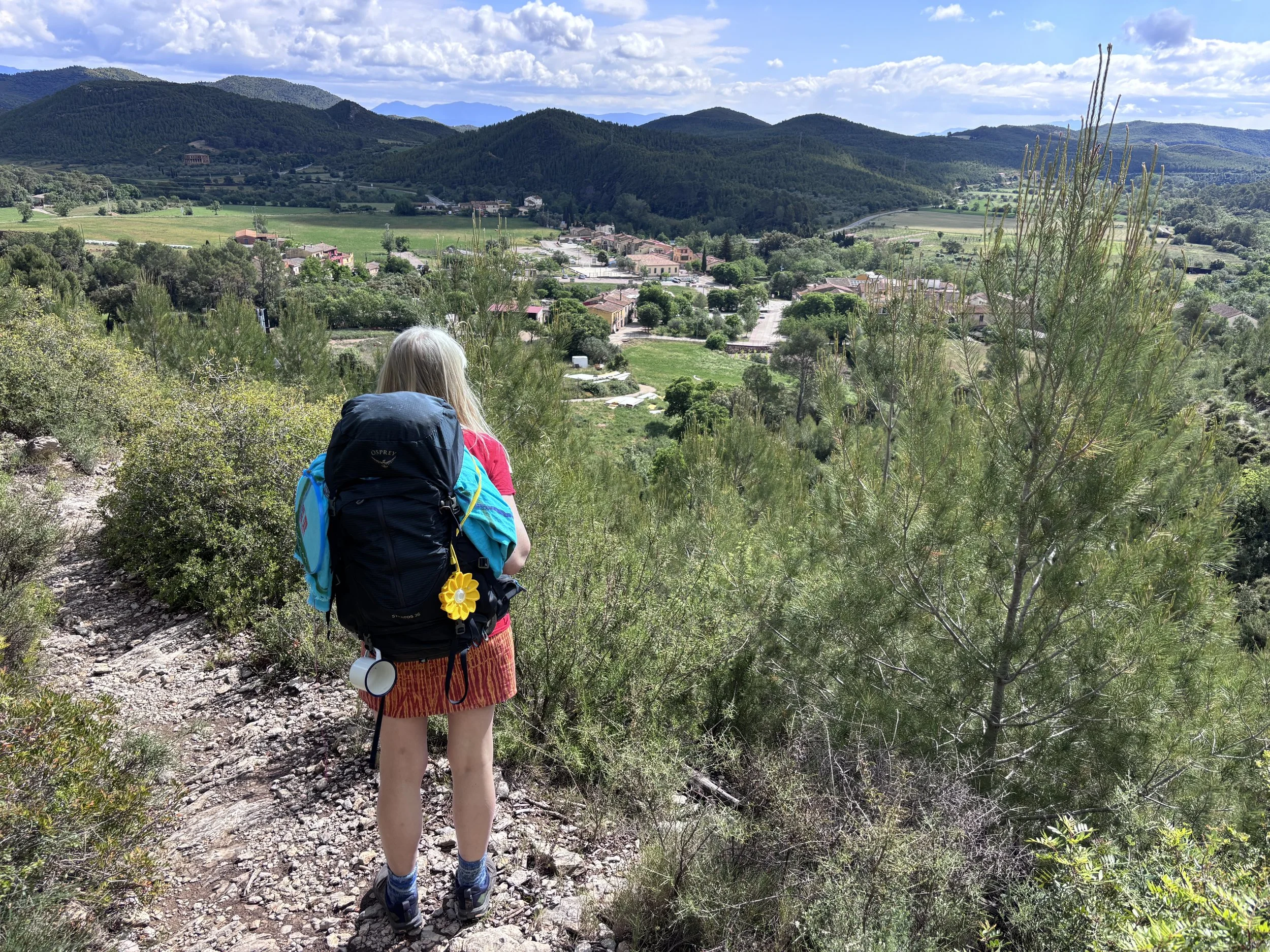
Walking through Albanyà
In preparation for the Walking Assembly at the beginning of May, my partner Nick and I set out to walk the River Muga from its upper reaches in the eastern Pyrenees to the Mediterranean Sea.
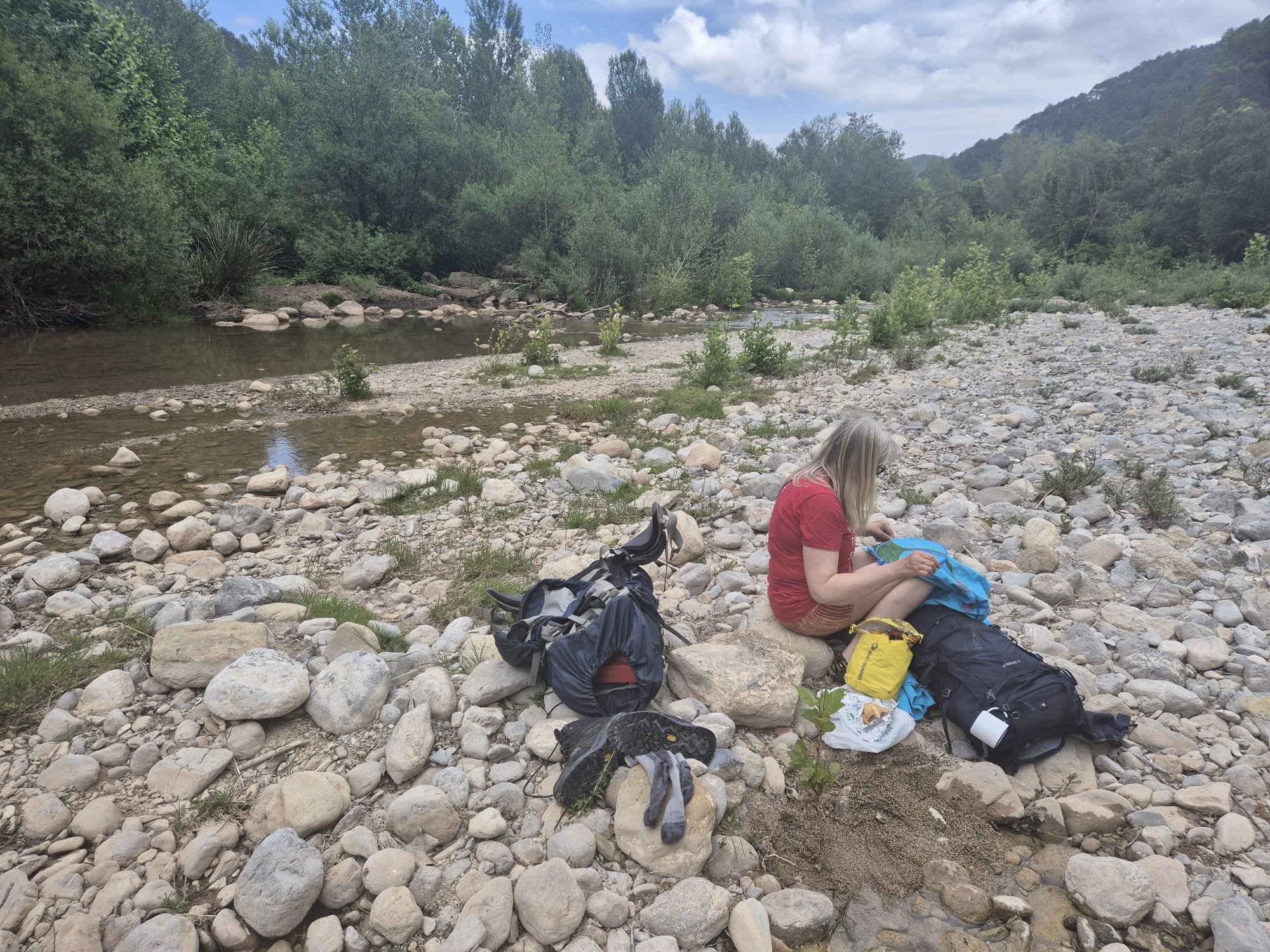
In the weeks before leaving, I had prepared a new blue tablecloth, mapping the river valley in stitch. Like many of my walking cloths, it became both a companion and a way of paying attention. Spread out for picnics, conversations and moments of rest, I gradually gathered the colours of the river and its villages in stitch.
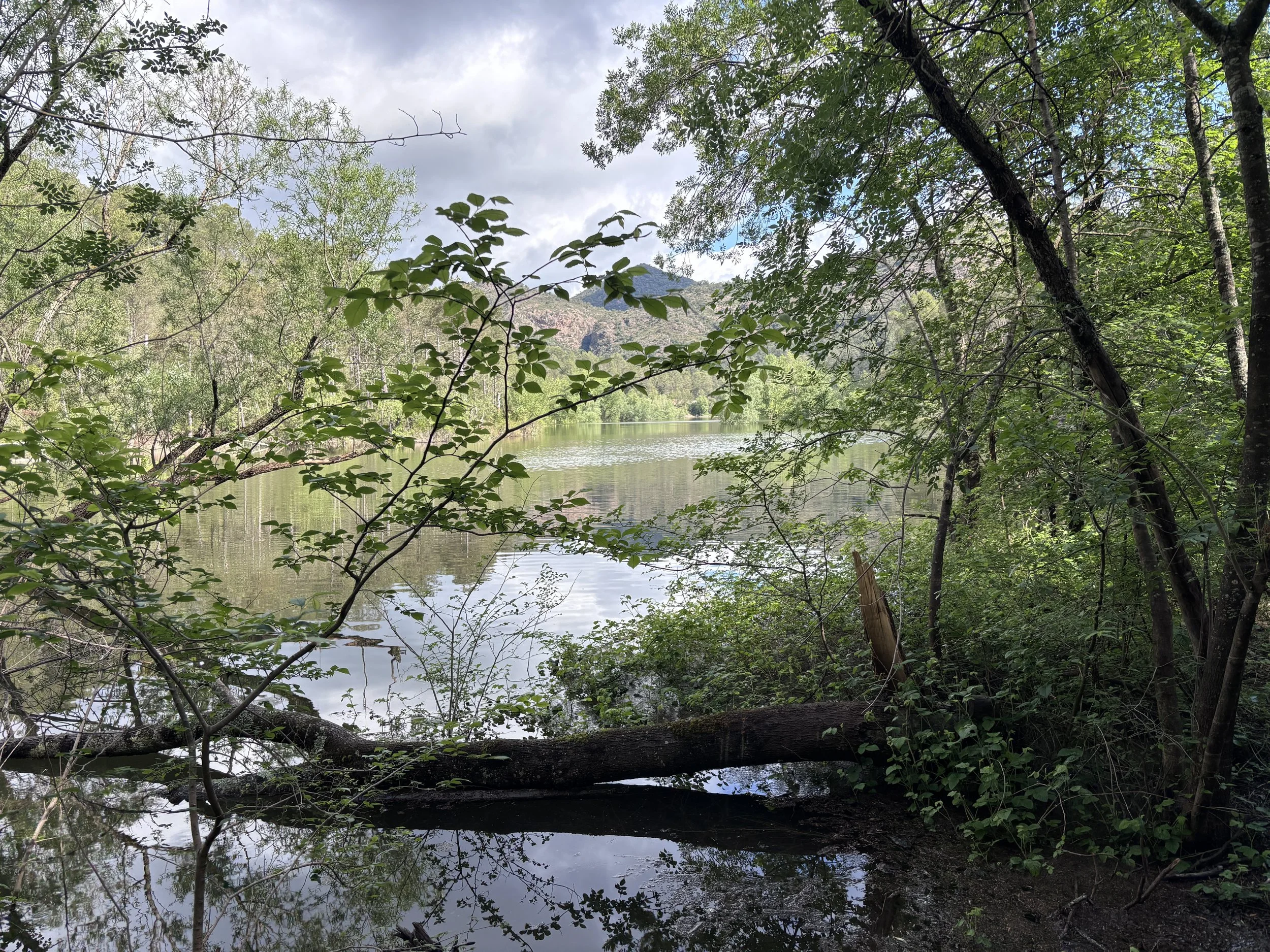
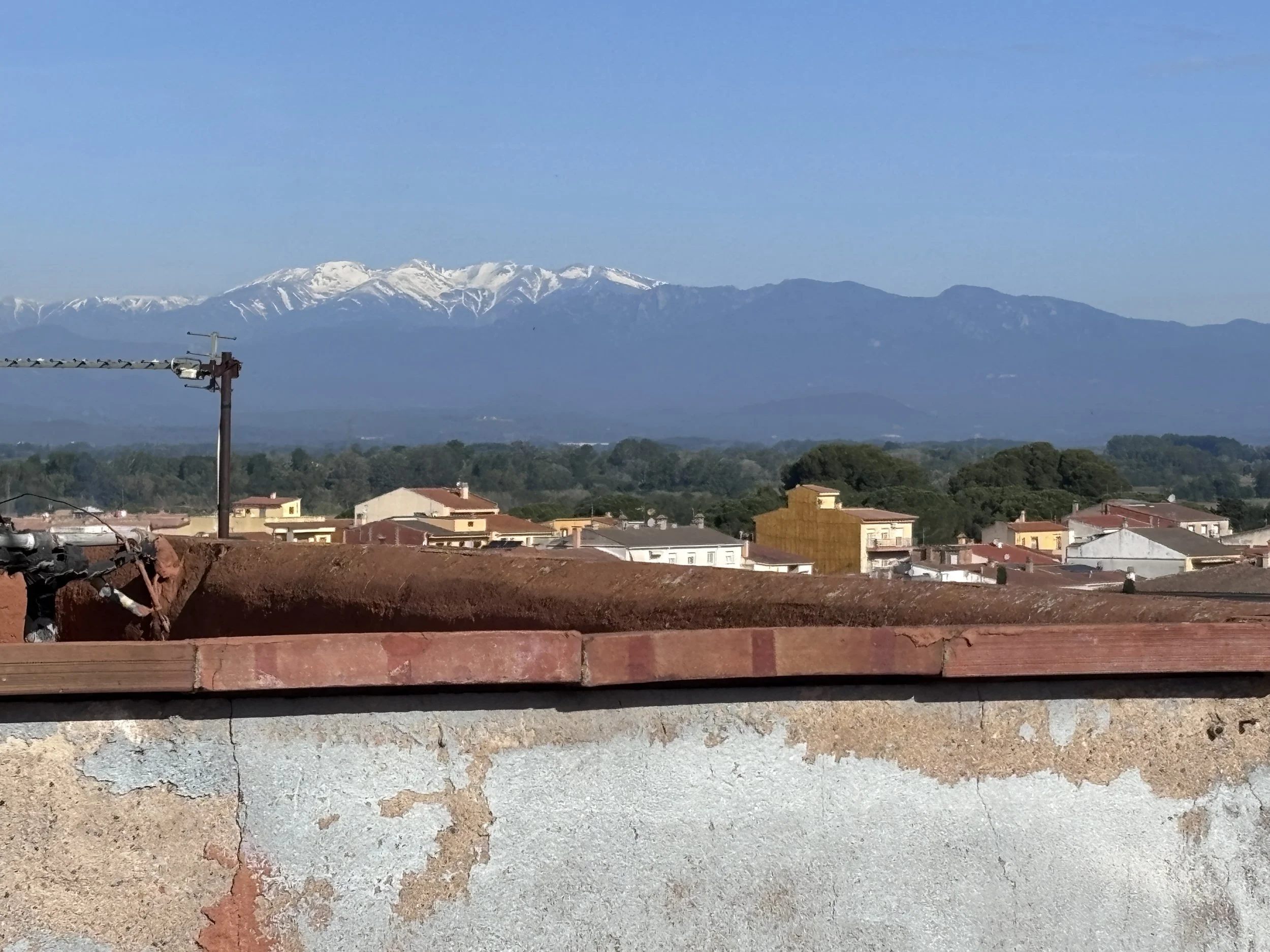
The Muga is only 58 kilometres long. Rising below Mont Negre on the French side of the border, it crosses into Catalonia, flows through oak forests, mountain villages and the Darnius-Boadella reservoir before finally reaching the Gulf of Roses.
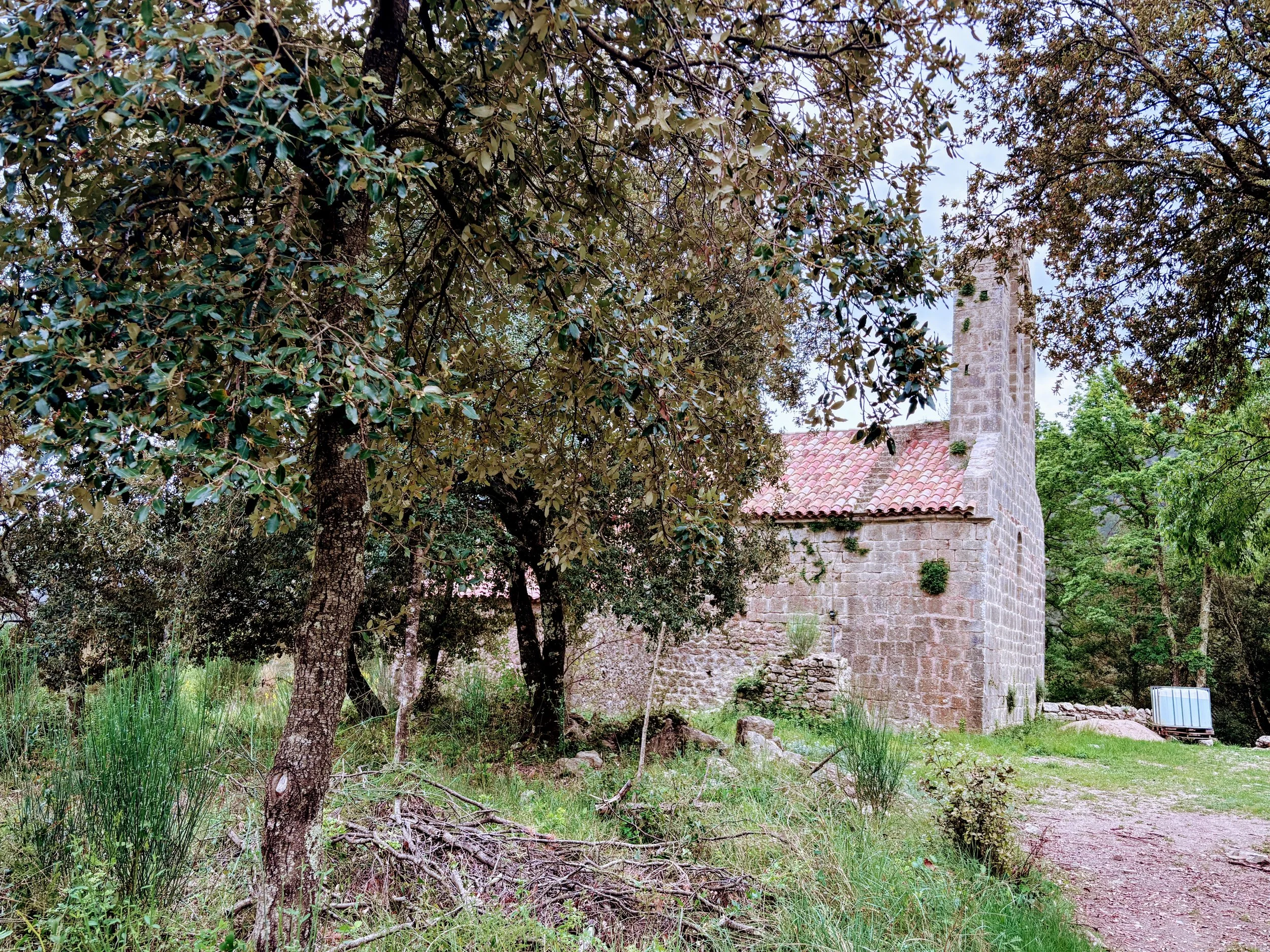
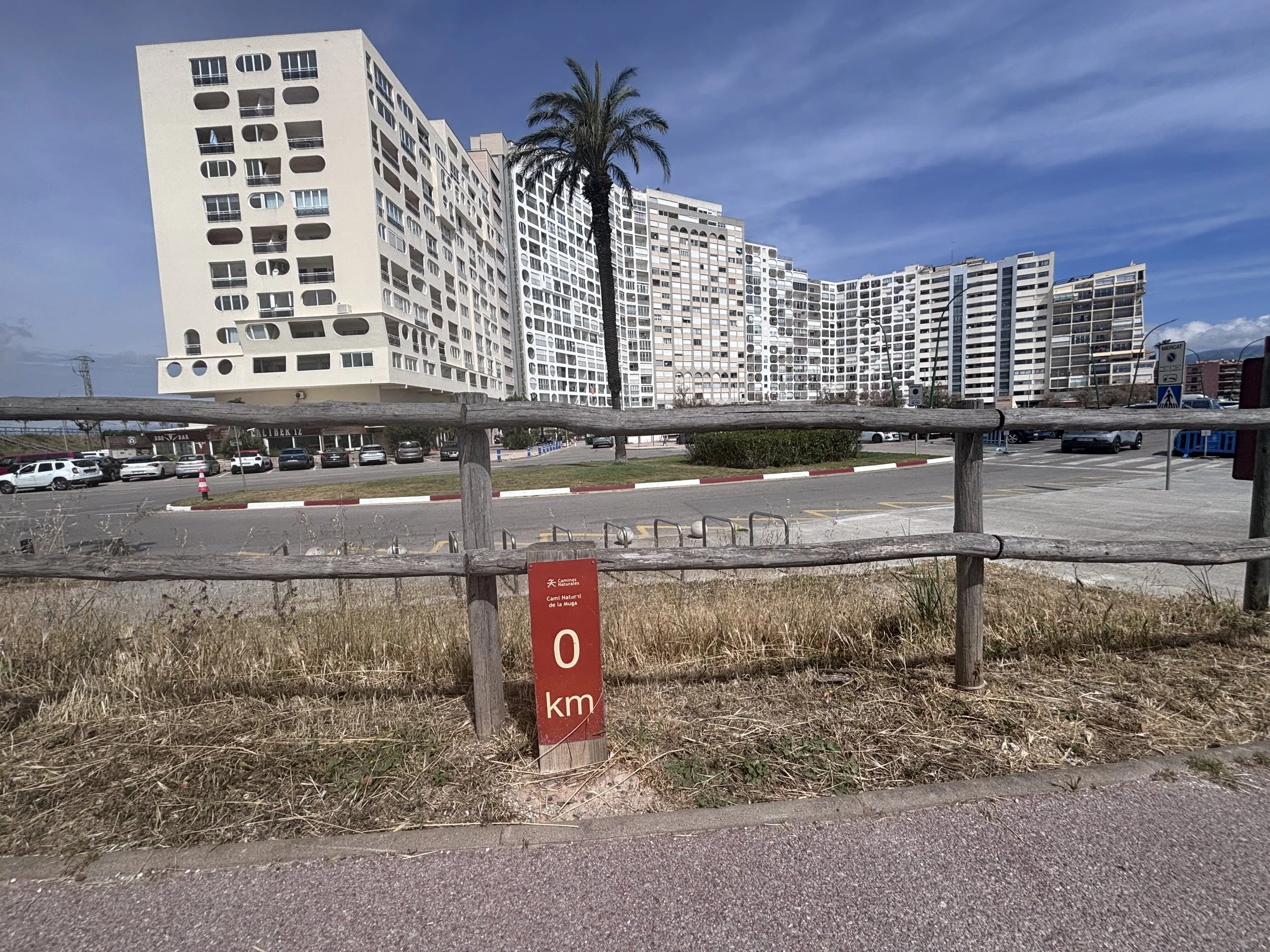
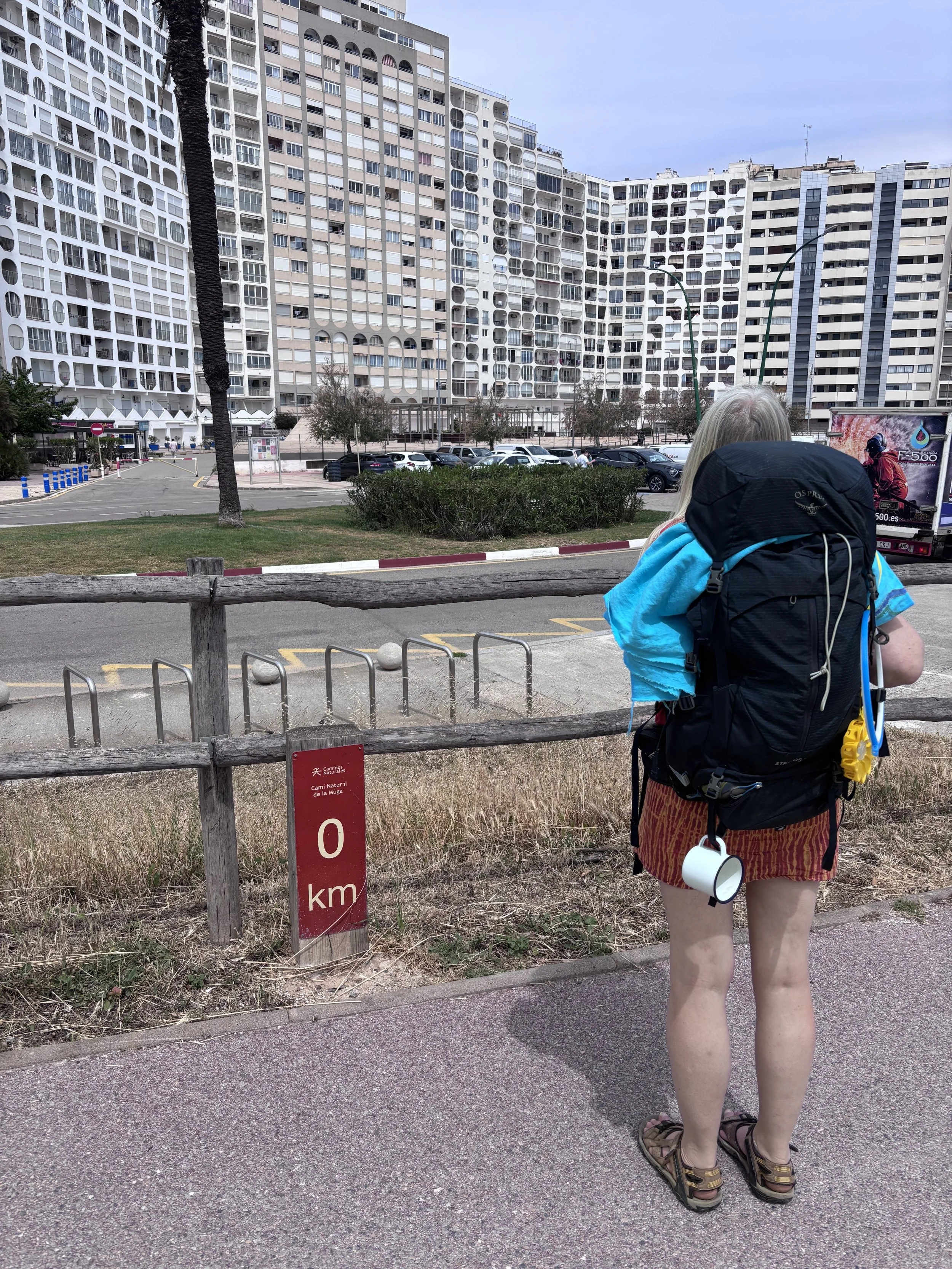
We began in the Bassegoda Park, climbing first to the small church of Sant Bartomeu before following the river through Albanyà, Sant Llorenç de la Muga, Terrades, Pont de Molins and Castelló d'Empúries, ending at the sea in Empuriabrava.
There is far too much to tell in a single post.
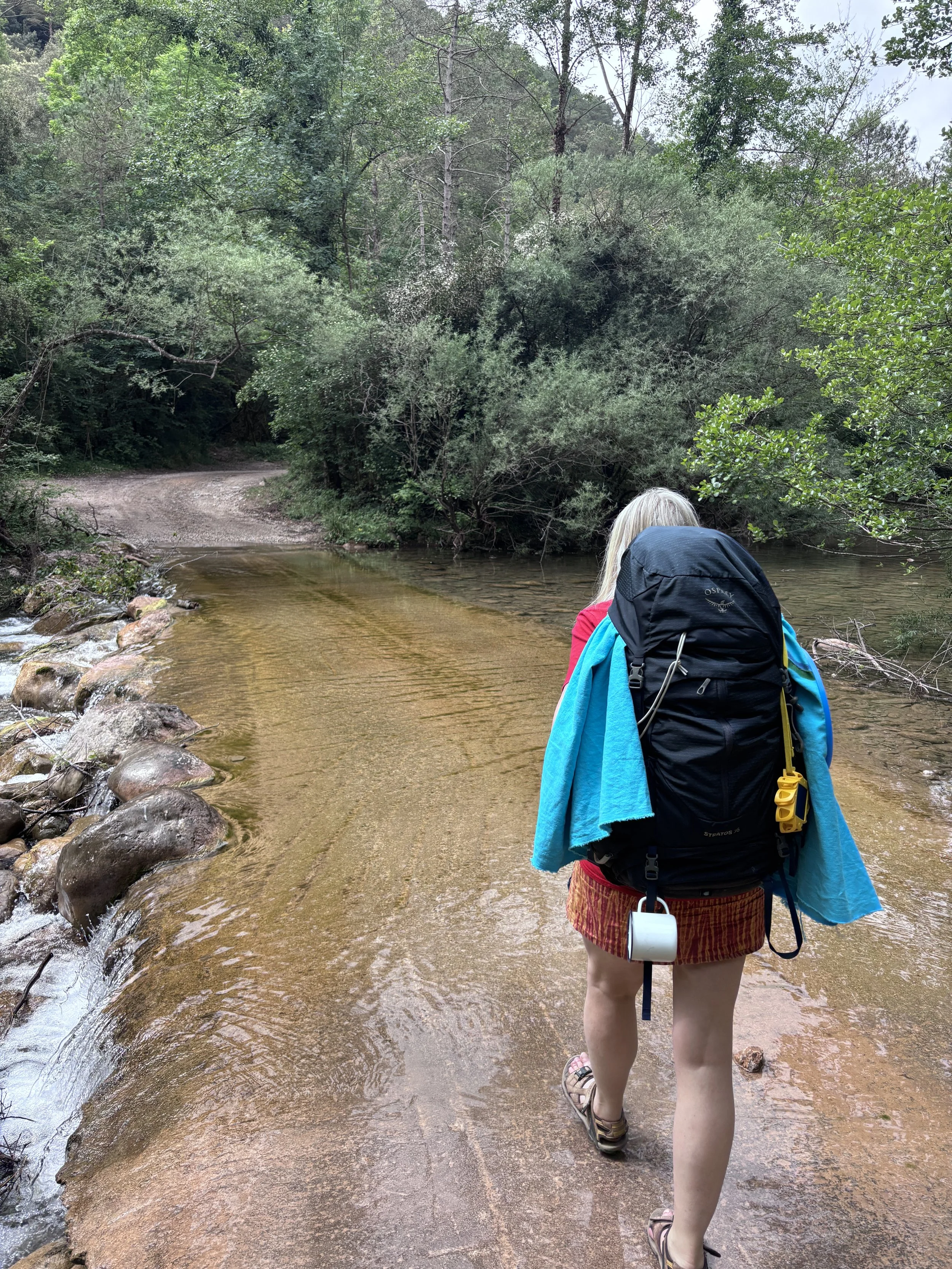
There was getting lost on our very first climb, and later almost being flooded on the long approach to Terrades. There were magnificent oak woods carpeted with wild flowers, an astonishing chorus of birdsong, and rock formations that seemed to change character with every bend in the river.
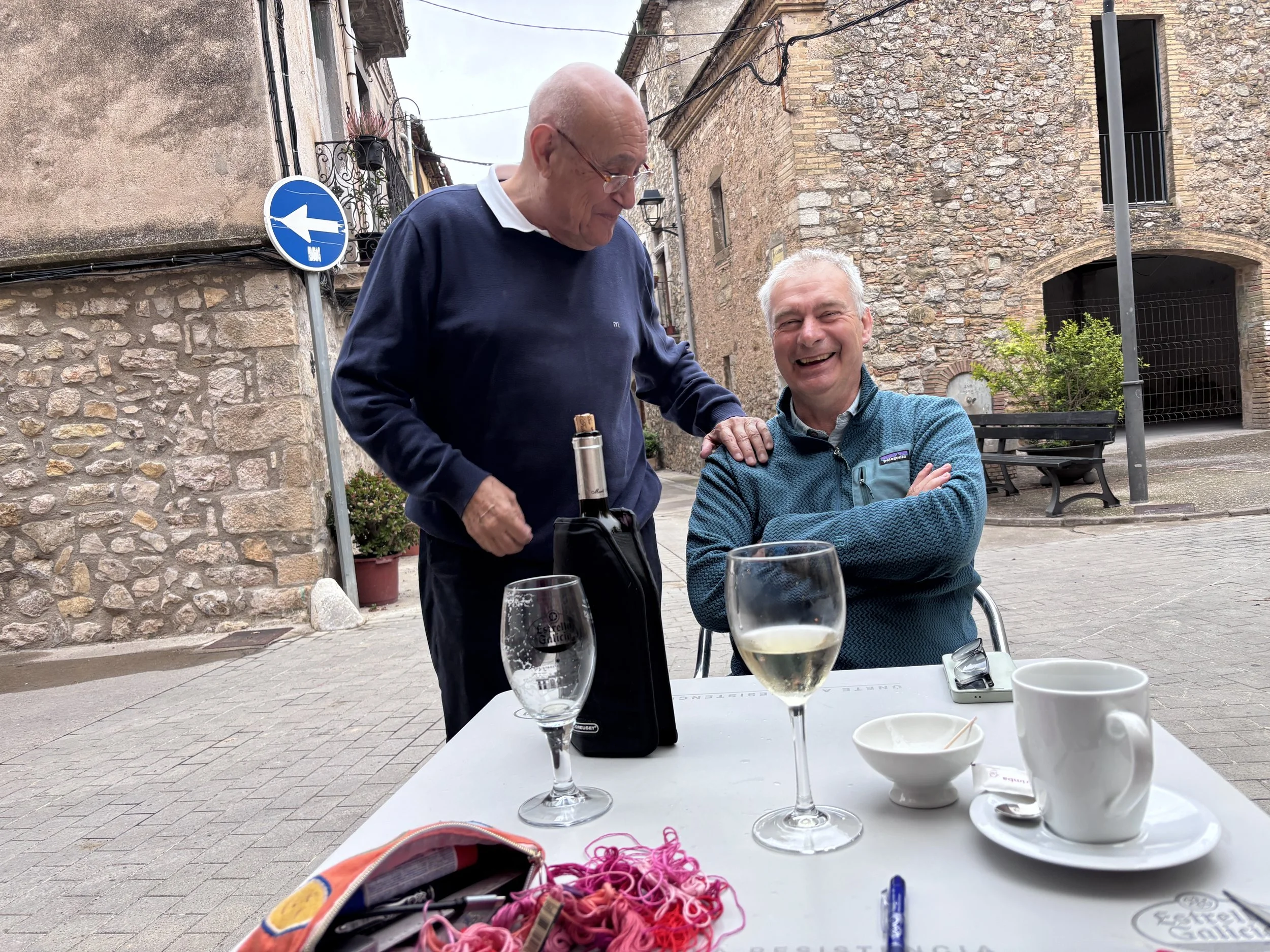
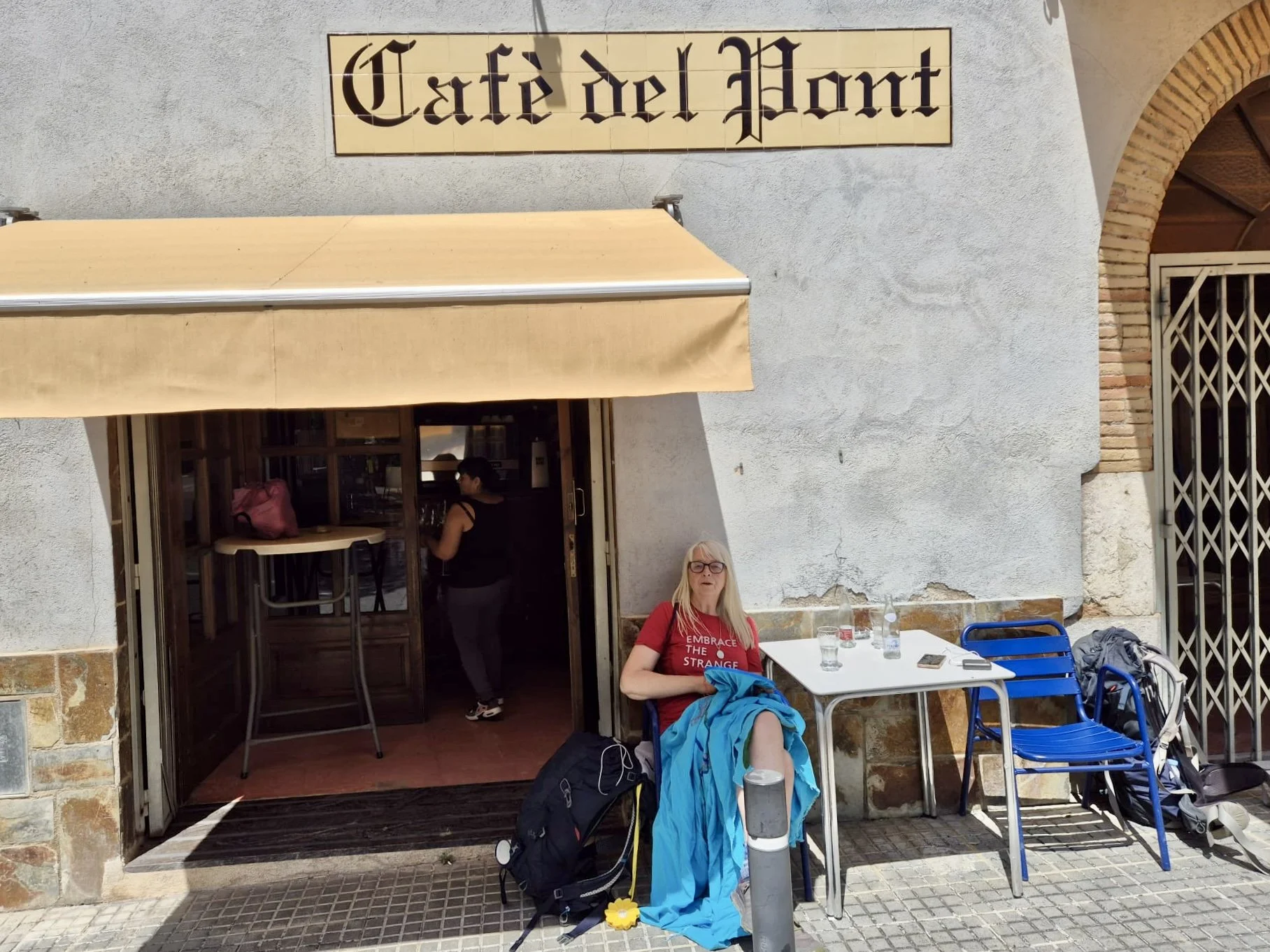
The villages often felt almost deserted, waiting quietly for the return of their summer residents. In Sant Llorenç, piano music drifted from an open house into the empty streets. When every restaurant had closed for the evening, Pilar, the owner of our guesthouse, rescued us with an impromptu supper. In Pont de Molins there were welcome plates of patatas bravas, while in Albanyà there was, inevitably, a second bottle of wine.
We learned about the destruction of the church of Santa Cecília in Terrades during the Franco period, spent a memorable night with Carlo at the magical El Forn hotel, picnicked on the dam, and felt an unexpected sense of relief as we passed beneath the AP-7 motorway, grateful that we were walking beside it rather than travelling along it.
Like every good river walk, the Muga became much more than a route. It became a way of entering a landscape slowly, of noticing its rhythms, its people, its histories and the many small acts of generosity that make a journey memorable.
It was the perfect preparation for the Walking Assembly that was about to begin.