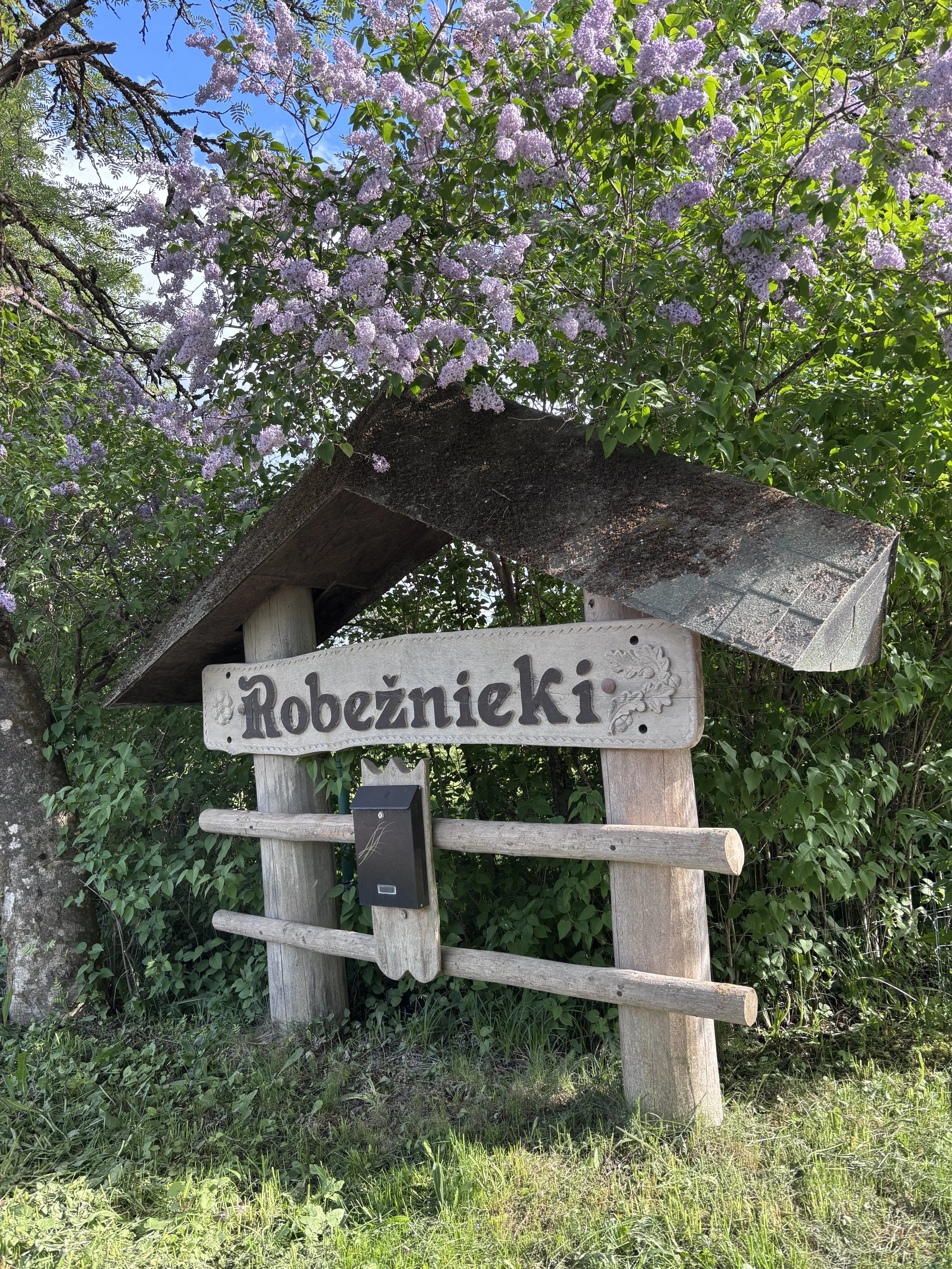
A Garden called LAUX
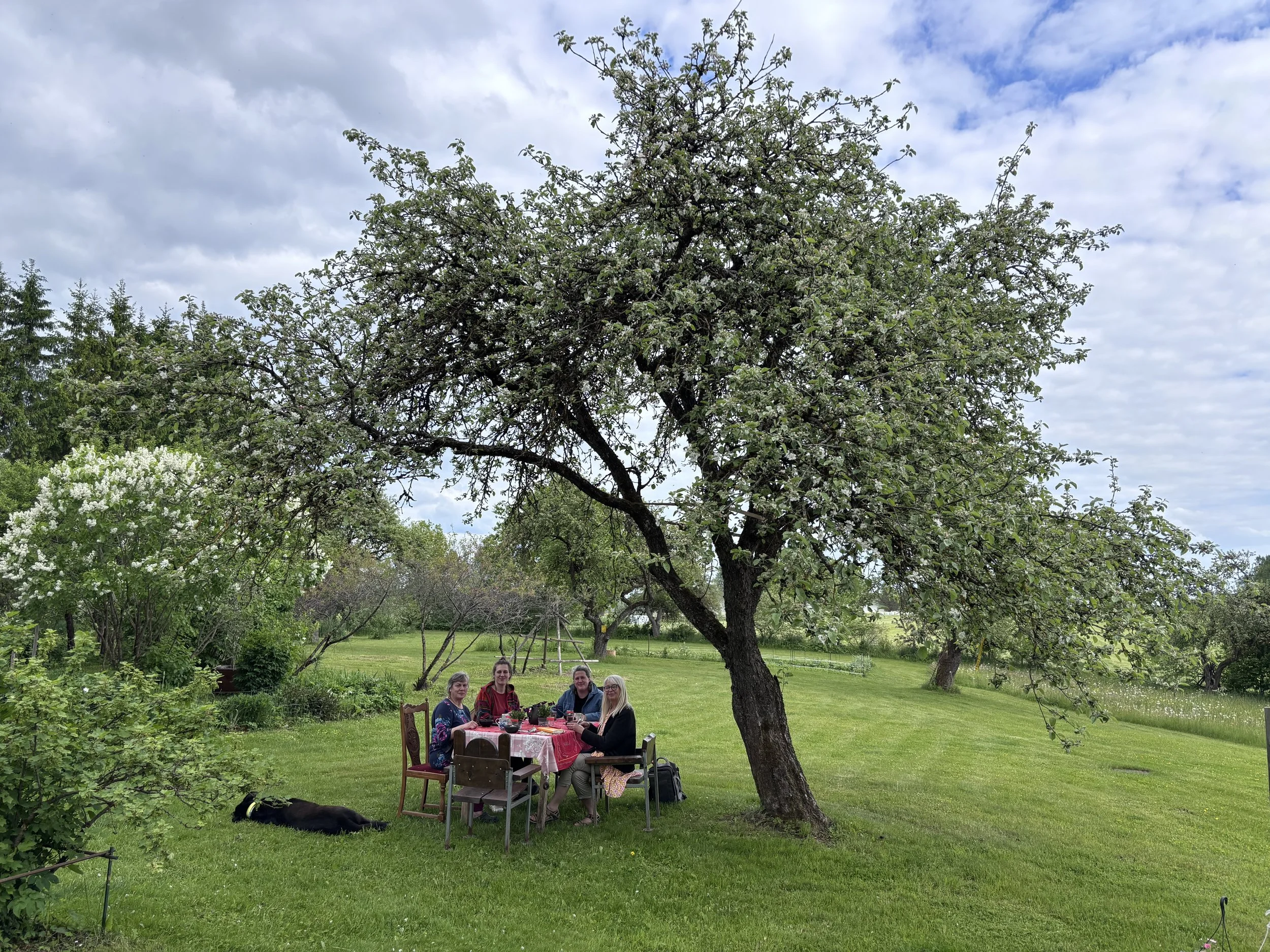
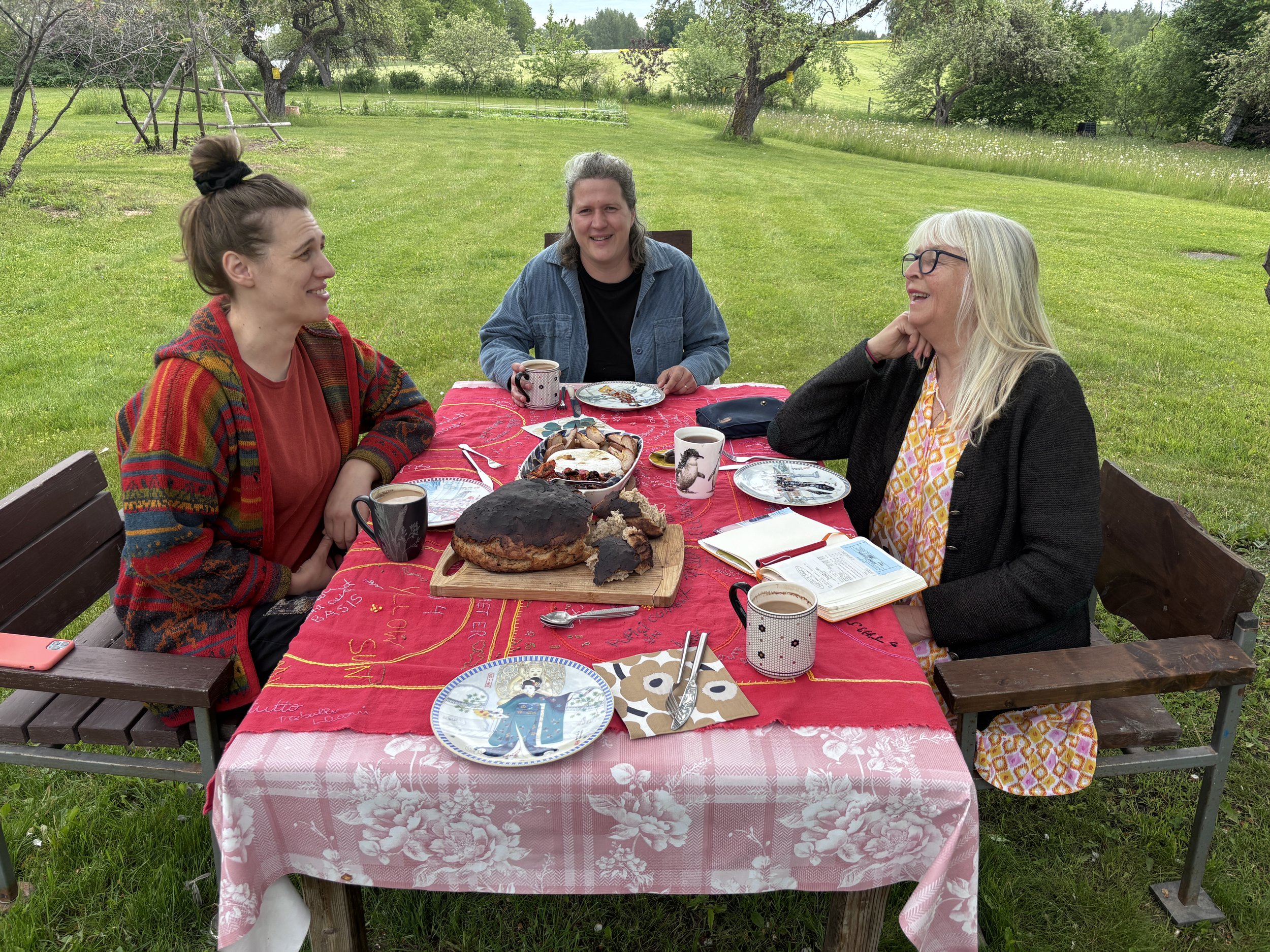
Lunch in the LAUX garden
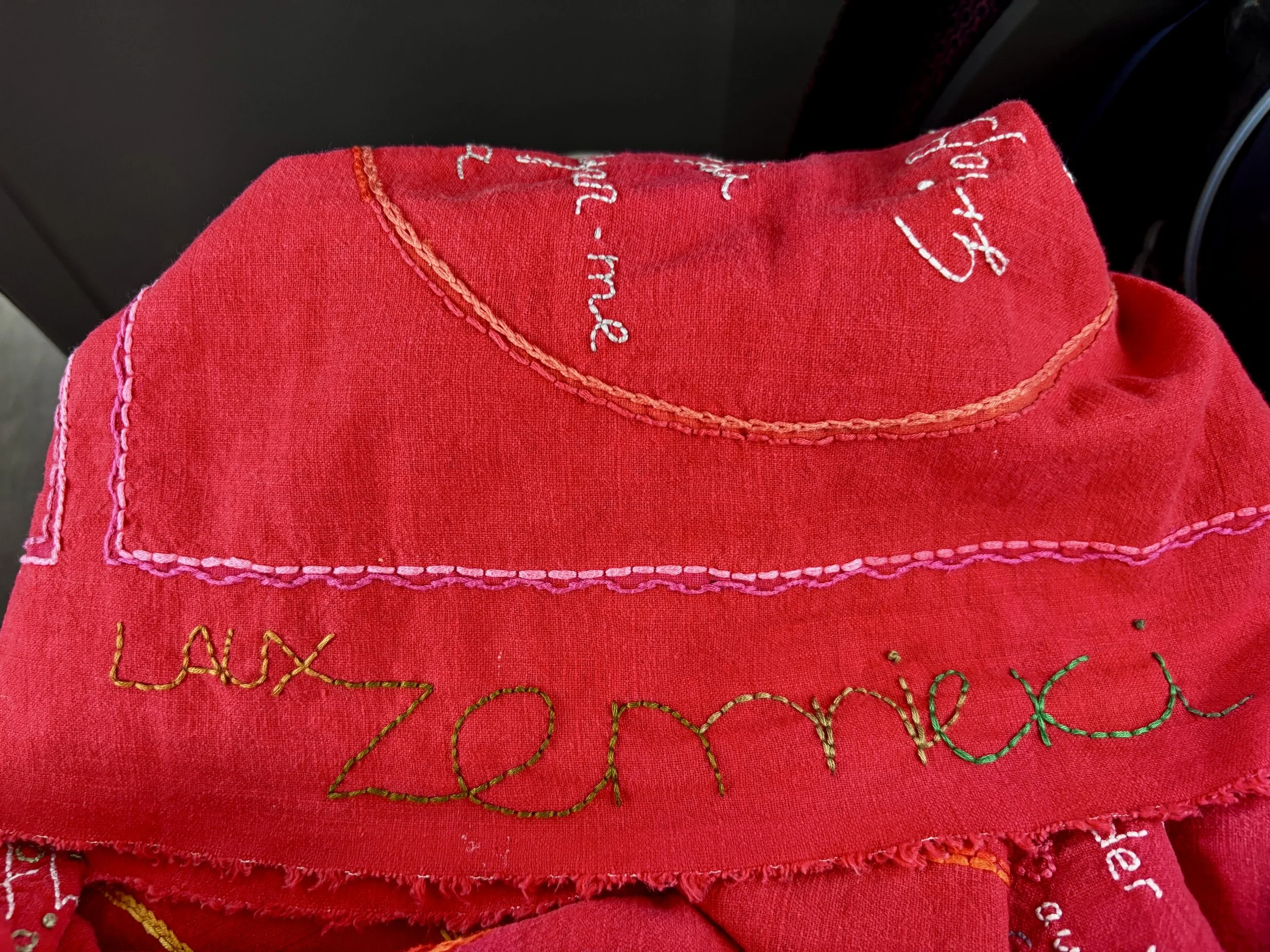
Laux derives from the Latvian word lauks, meaning field, signalling an openness to agriculturally rooted experimentation. The shape of the word also playfully evokes pagan knowledge: † to stop bad things, x to get things moving.
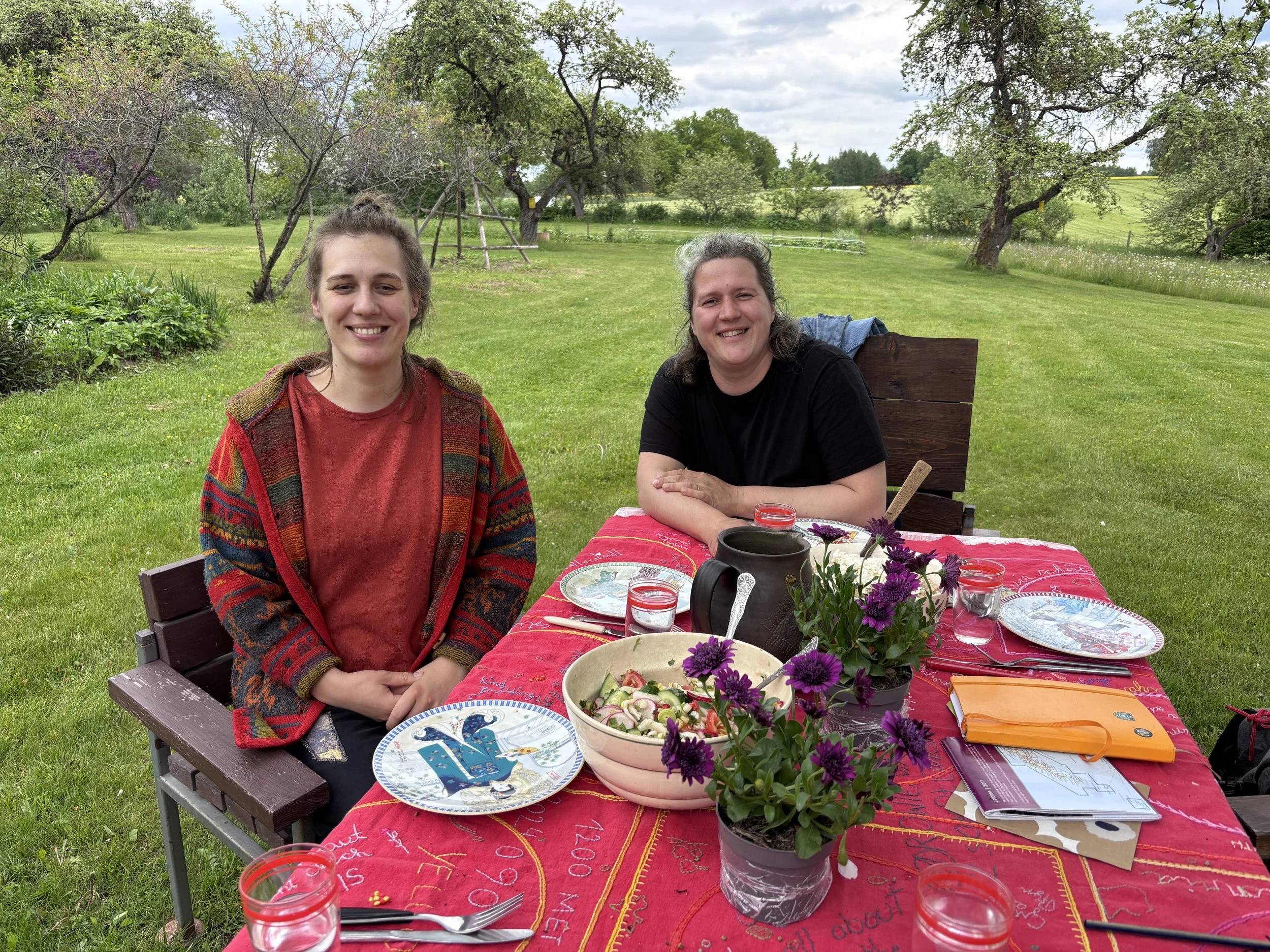
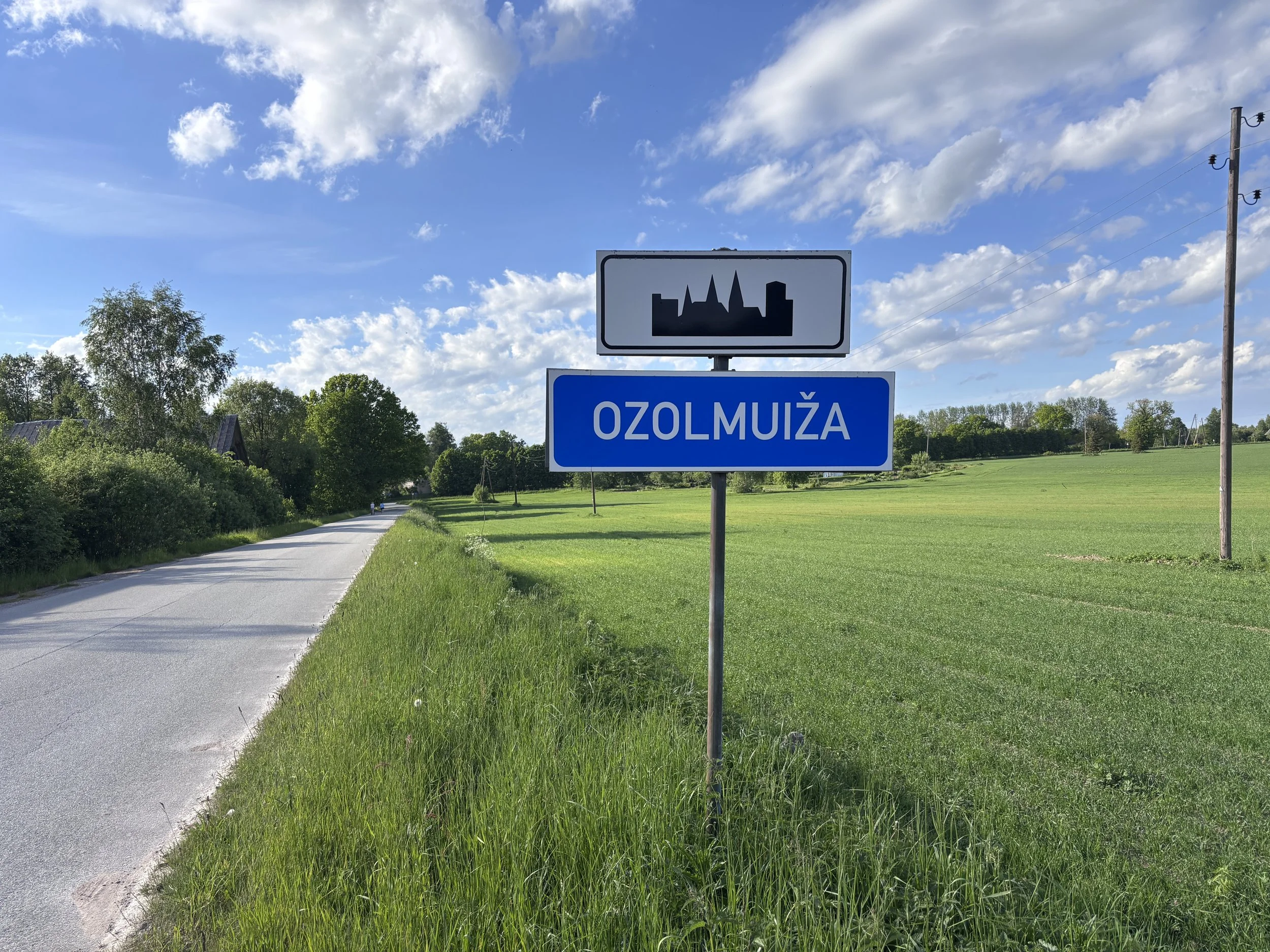
On the first of June I visited Marta and Madara, who run LAUX, a garden and hospitality venture near Ozolmuiža in the Valmiera region of Latvia. Both studied history in Riga before moving to the UK, where they spent twelve years working in hospitality. During Covid, they began imagining what they would do if they suddenly came into a large amount of money.
The prize never materialised, but the dream of returning to Latvia did. Marta's family had bought land near Valmiera, with enough space for everyone.
In 2022 they packed their car, their dog and their belongings and drove the 1800-plus kilometres home. Their intention was to establish a smallholding while drawing on their skills in cooking, catering and hospitality.
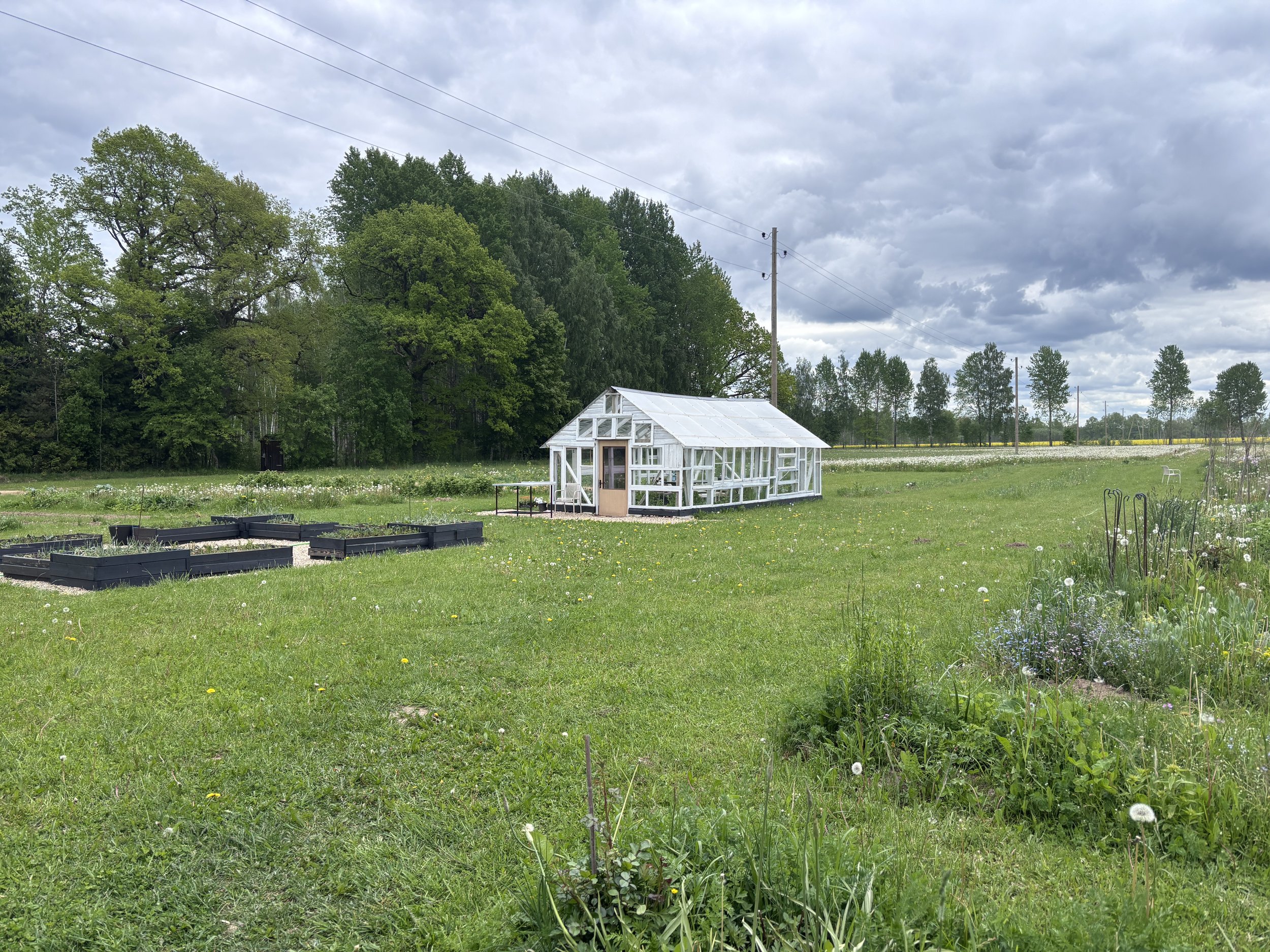
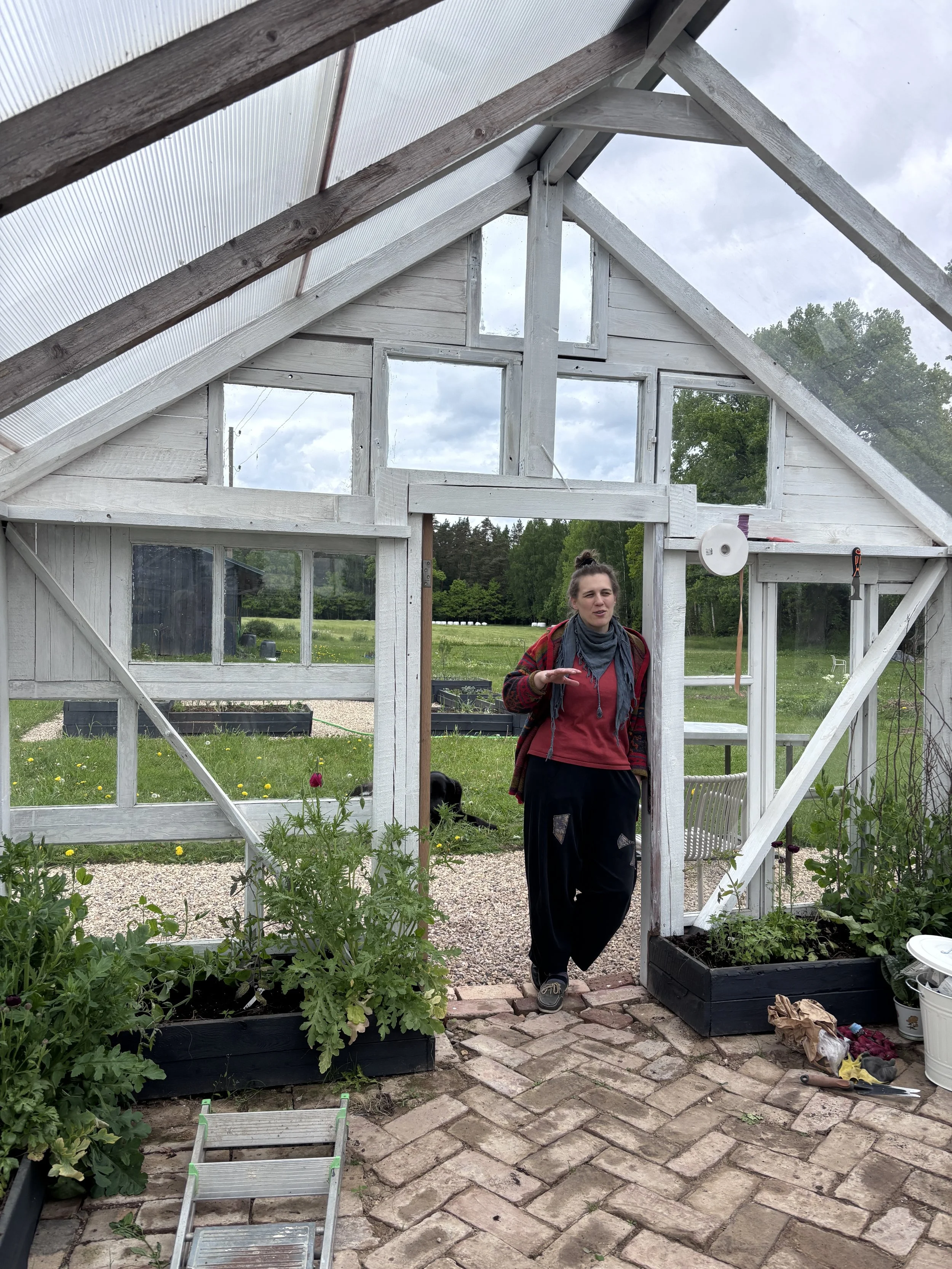
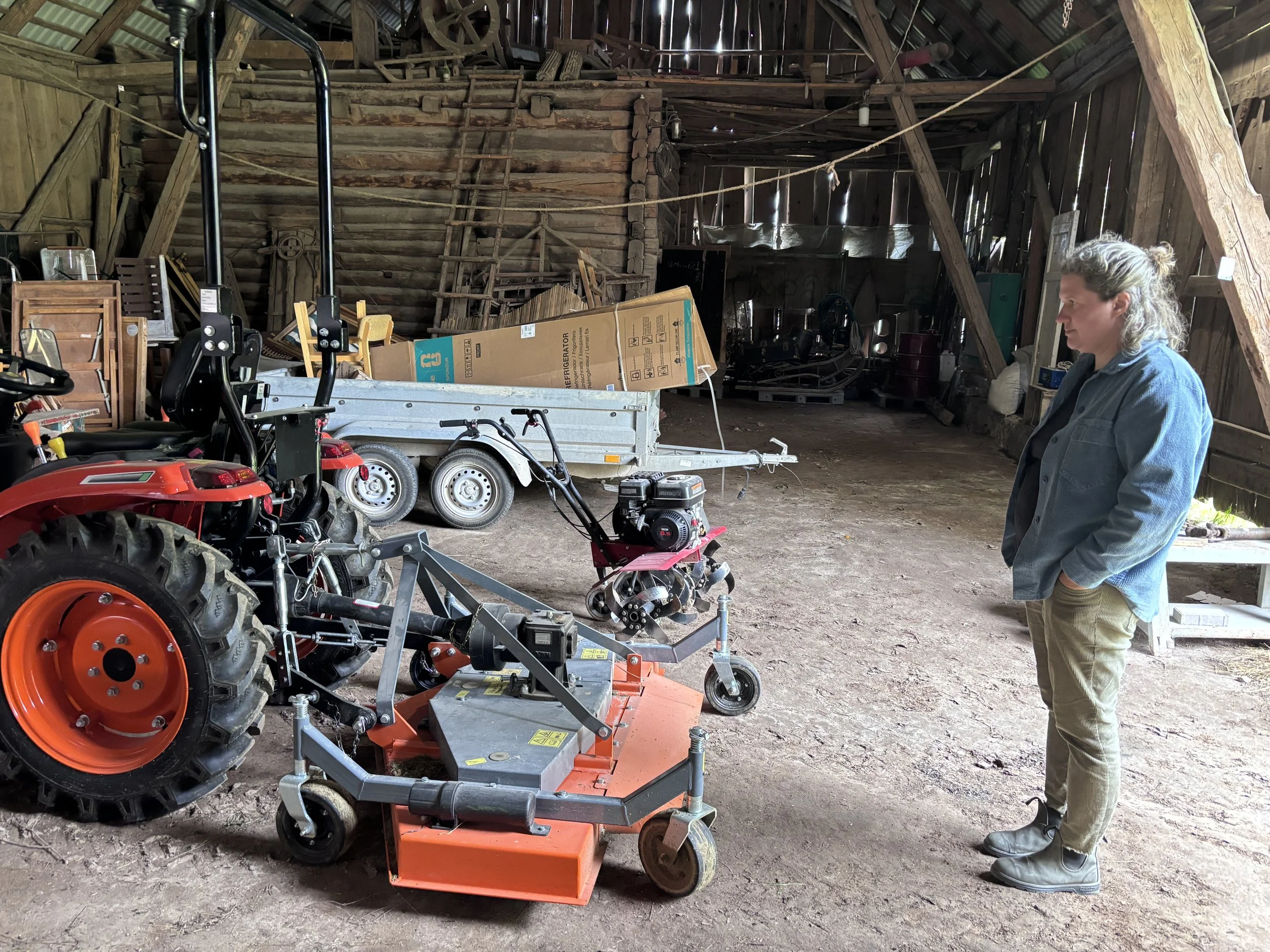
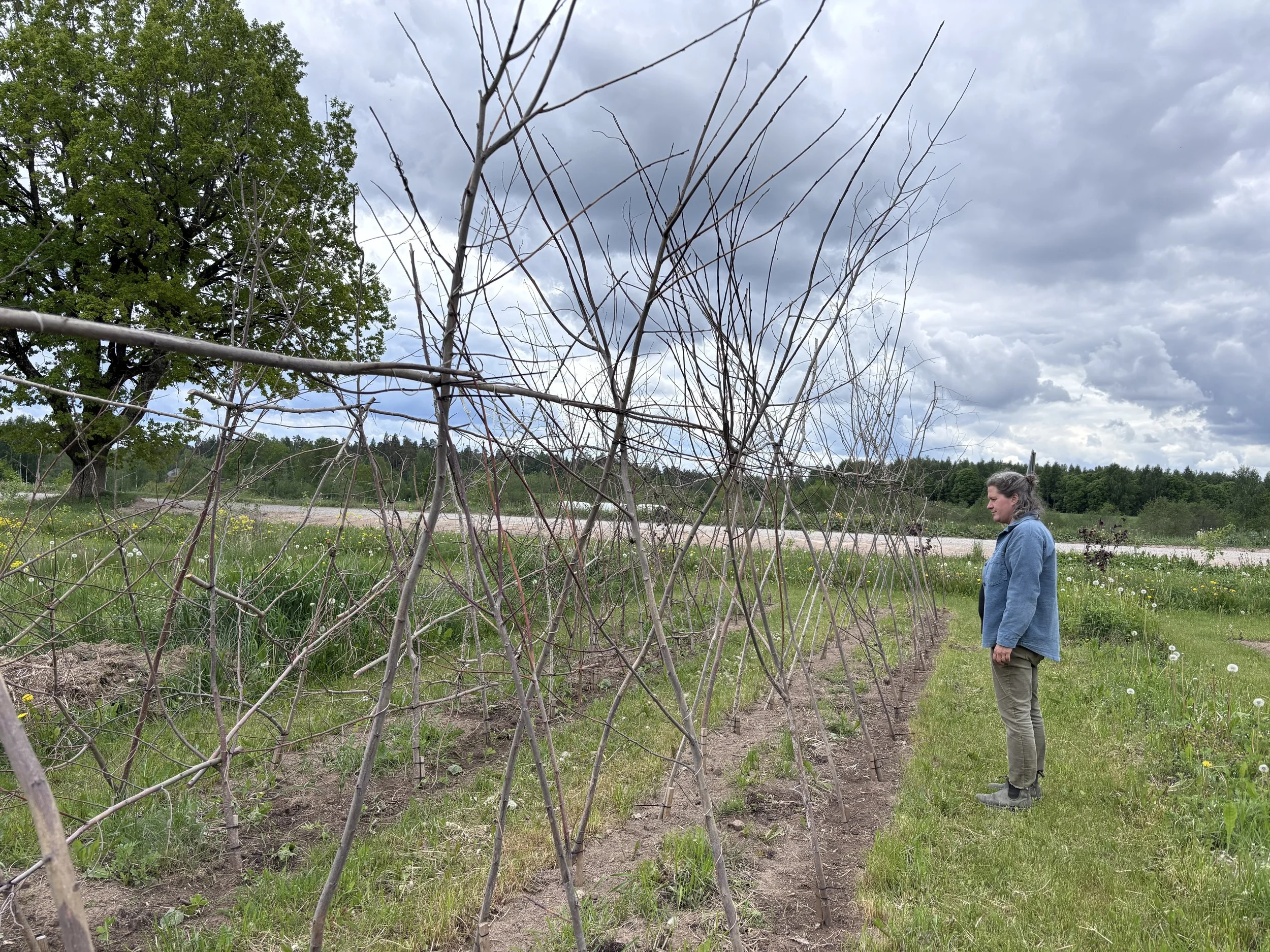
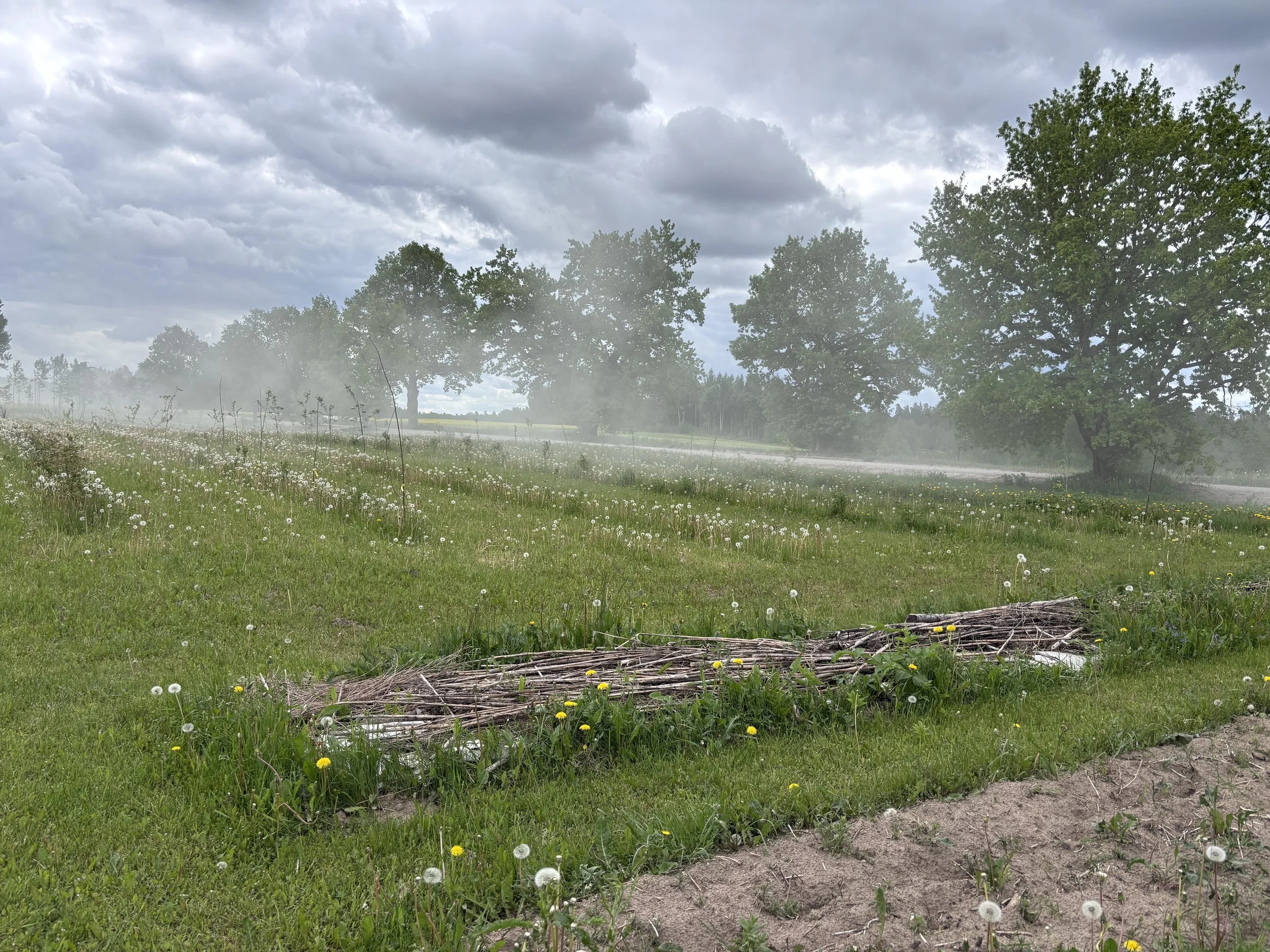
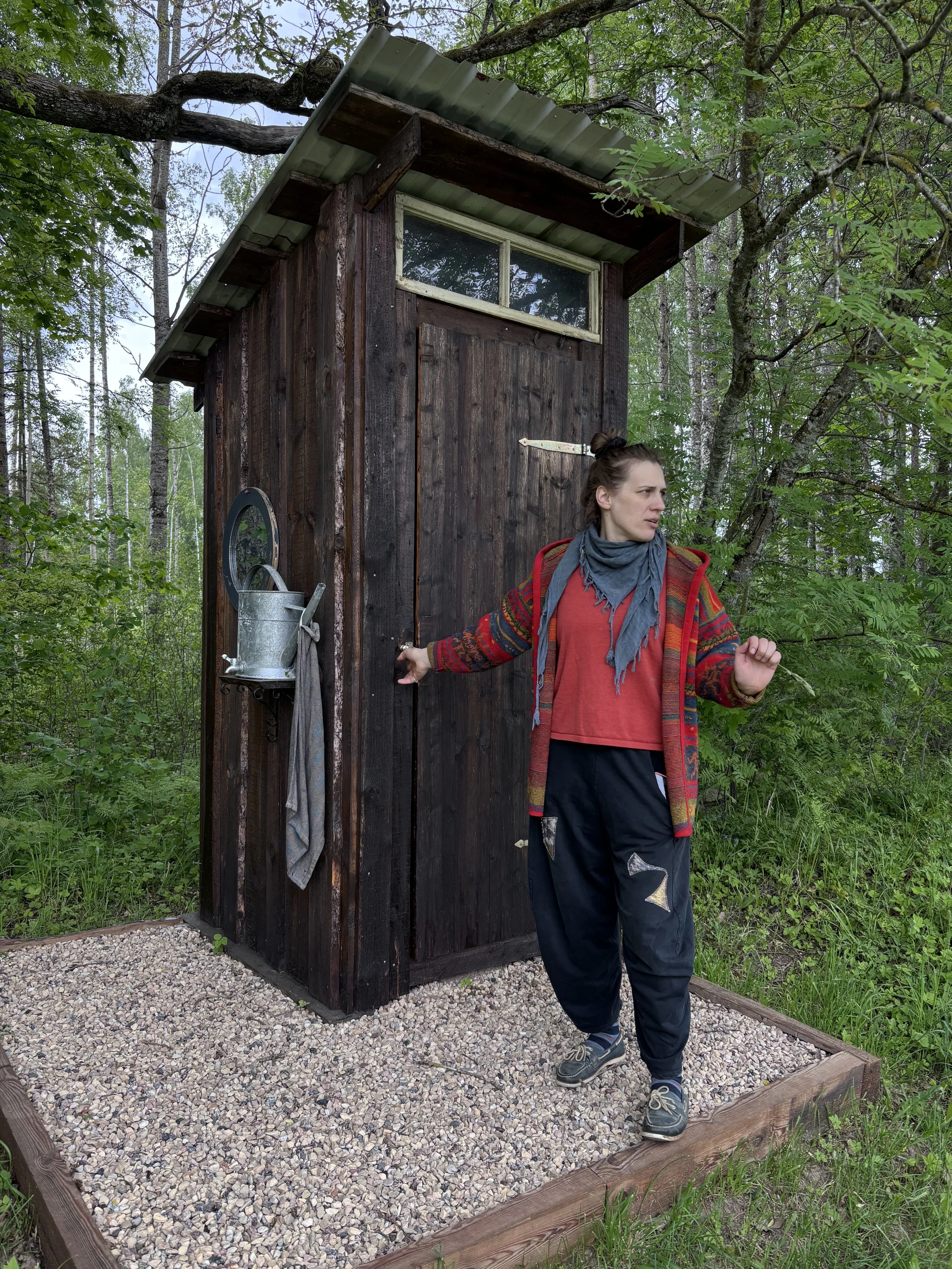
Since then, they have transformed parts of the family land to provide food both for themselves, family which they live with and others. They built a greenhouse and a compost toilet and converted an old hay barn into an indoor greenhouse and community venue. The place is full of abundance: apple trees, herbs of all kinds, tomatoes, fruit bushes, carrots, broccoli and chickens – you name it, it is there.
Today they make their living through weekly ready meals sold at farmers' markets, where they offer changing seasonal dishes. It provides enough to live, they say, though not enough to invest. They also organise burger nights at the beginning and end of the school year. Occasionally, they host more elaborate multi-course dinners in the greenhouse or cater for private celebrations. At Christmas, the hay barn becomes the setting for an annual shopping event, selling preserves, drinks, crafts and vintage finds collected along the way.
Latvians, they explain, love traditions. Events are organised around Easter, Mother's Day, the summer solstice and Christmas, though never on the day itself so as not to compete with existing community celebrations. Community is clearly at the heart of what they do. One example is the annual Lappier Peasant Forum, a free event held in the barn around a theme of common concern, bringing academics and local residents together. This provides an opportunity to discuss vernacular history, which is particularly important in a region where, until around 150 years ago, many people carried not their own family names but those of the manor to which they belonged. Tracing local histories can therefore be difficult. Next year's theme will be Home, helping people reconnect with the roots of their place. Another initiative is an archaeological excavation, with the final presentations taking place in their barn.
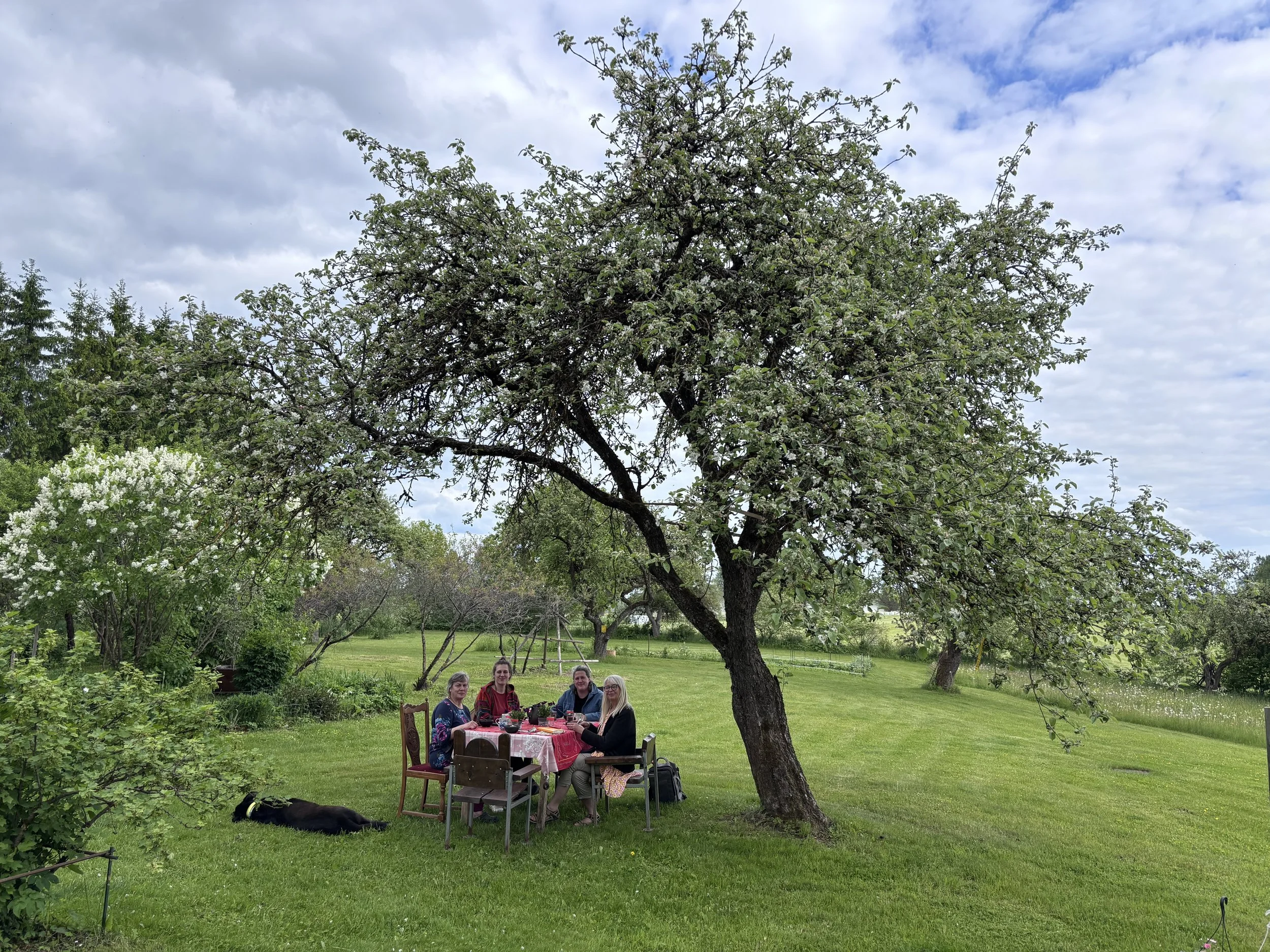
Marta and Madara laugh that they do not know whether they are peasants or farmers – the same word ZEMIEKI is used in Latvian – but insist that "the garden is everything we do". Following our delightful conversations beneath the apple trees and in the greenhouse, we went for a swim in the pond before touring the surrounding area. Travelling through Latvia, one quickly becomes aware that this is a country lived in with and amongst trees. Endless forests of pine and birch stretch to the horizon, villages appearing almost as clearings within them. Coming from Scotland, I found the scale of woodland and the sense of immersion in nature quite overwhelming. The whole day seemed to embody this gentle relationship with the land. Sitting under the apple trees, surrounded by sunshine, flowers and birdsong, and experiencing the effortless generosity with which Marta and Madara welcomed us, it felt as ifhospitality here was not an added service but simply a way of life. We were even offered to use the traditional wood smoke sauna by their mum.
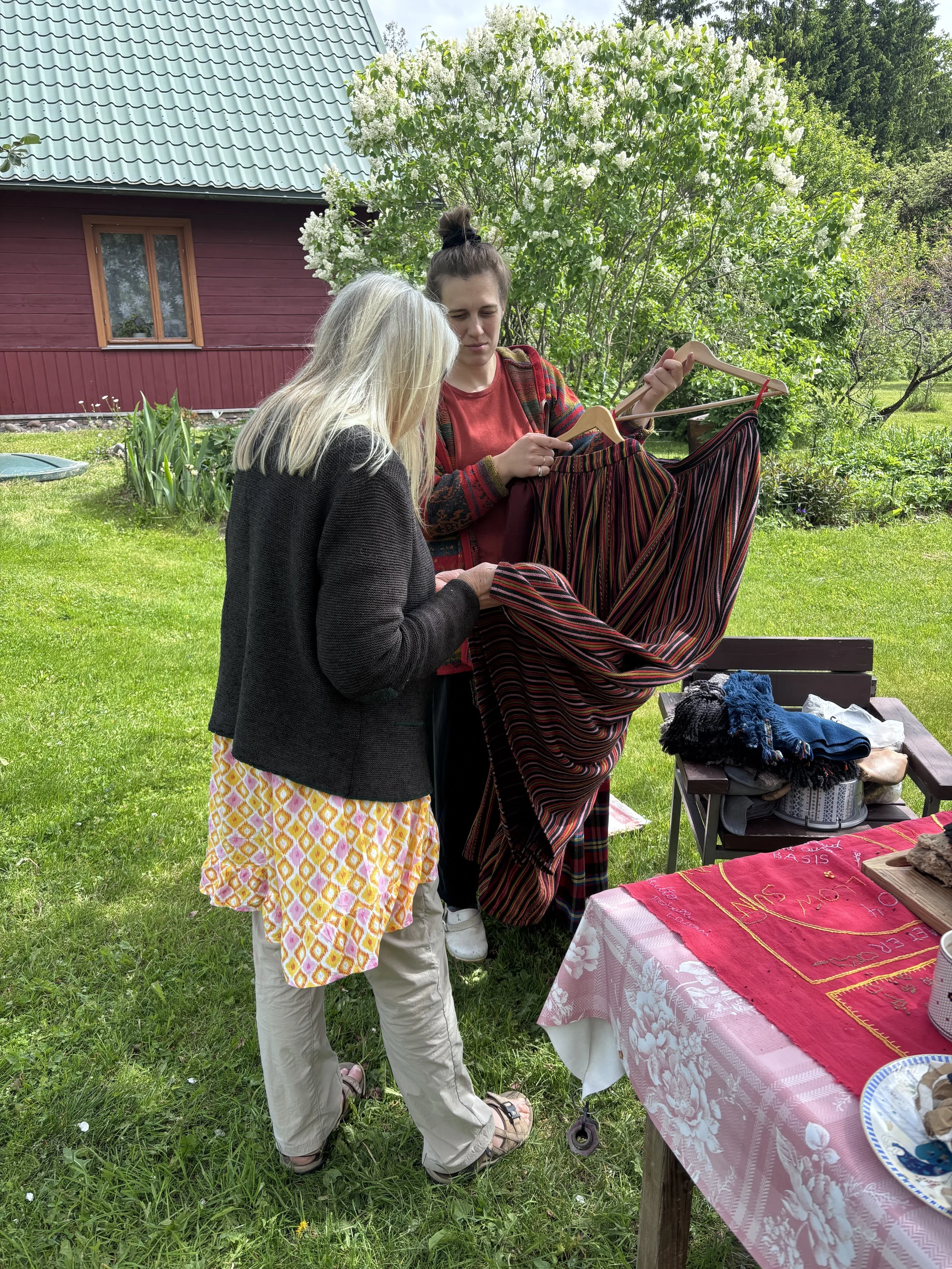
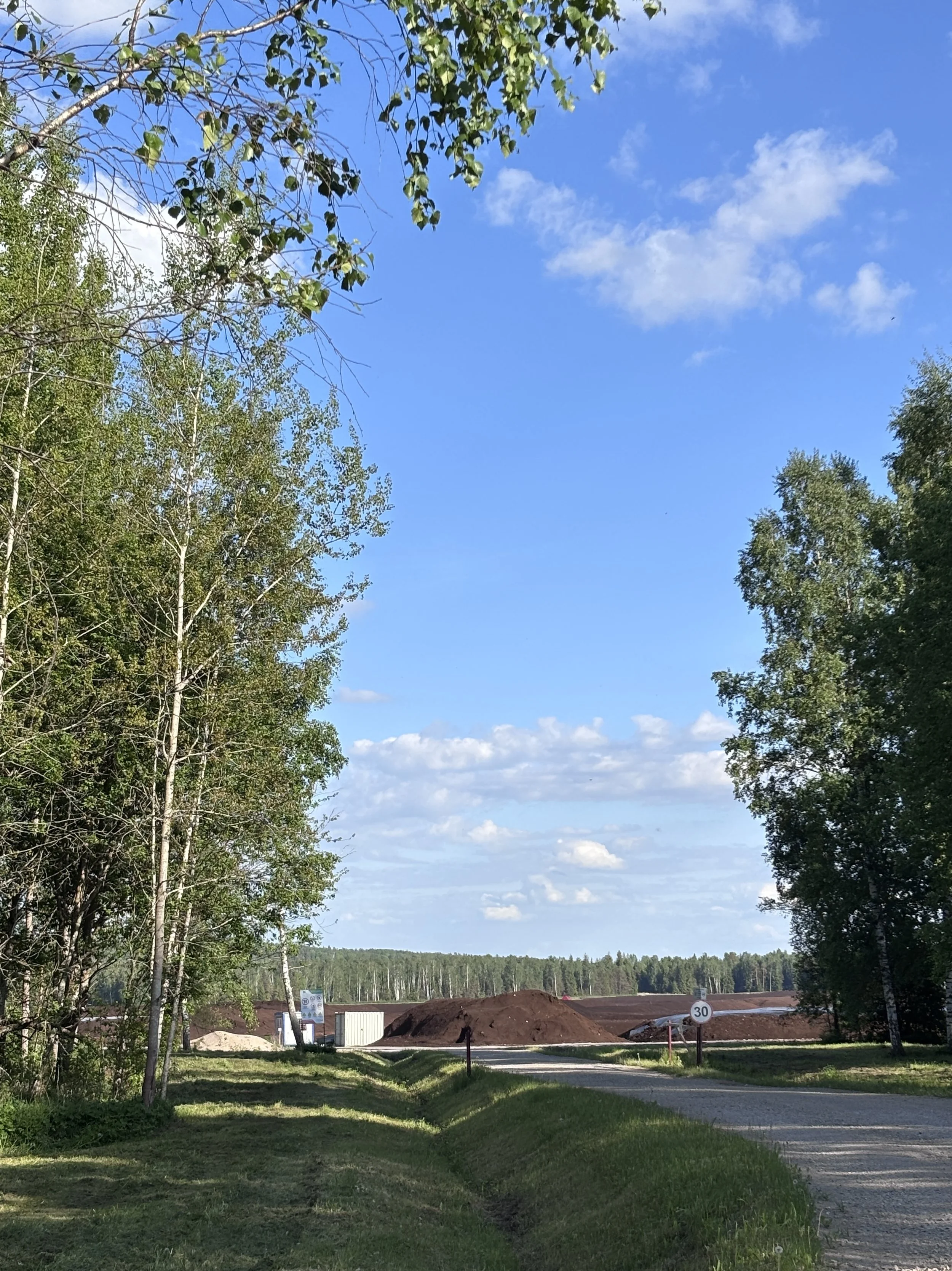
On the way we visited Ozolmuiža, a village of around 200 inhabitants, with its manor house, lake and single shop. Remarkably, Latvia's first technical book on weaving originated here and is recognised as one of the country's five hundred most important books. LAUX has drawn on illustrations from it for the design of their herbal garden. Nearby Dikļi, with around 900 inhabitants, possesses a remarkable open-air amphitheatre built for the great Latvian Song Festival traditions. Today, children from both villages attend school in Dikļi or Valmiera. The area's main industries include timber exports, fibreglass production, a dairy and a manufacturer of fire extinguishers exporting to the UK. Turf cutting is also still important here – used for fertilising and export.
What impressed me throughout was how heritage is understood not as something preserved behind glass, but as something lived. Whether through the Peasant Forum, archaeological digs, seasonal traditions or the weaving book that inspired the garden design, memory and everyday life seem closely intertwined. In a country that has repeatedly had to reclaim its identity, this quiet cultivation of belonging feels particularly significant.
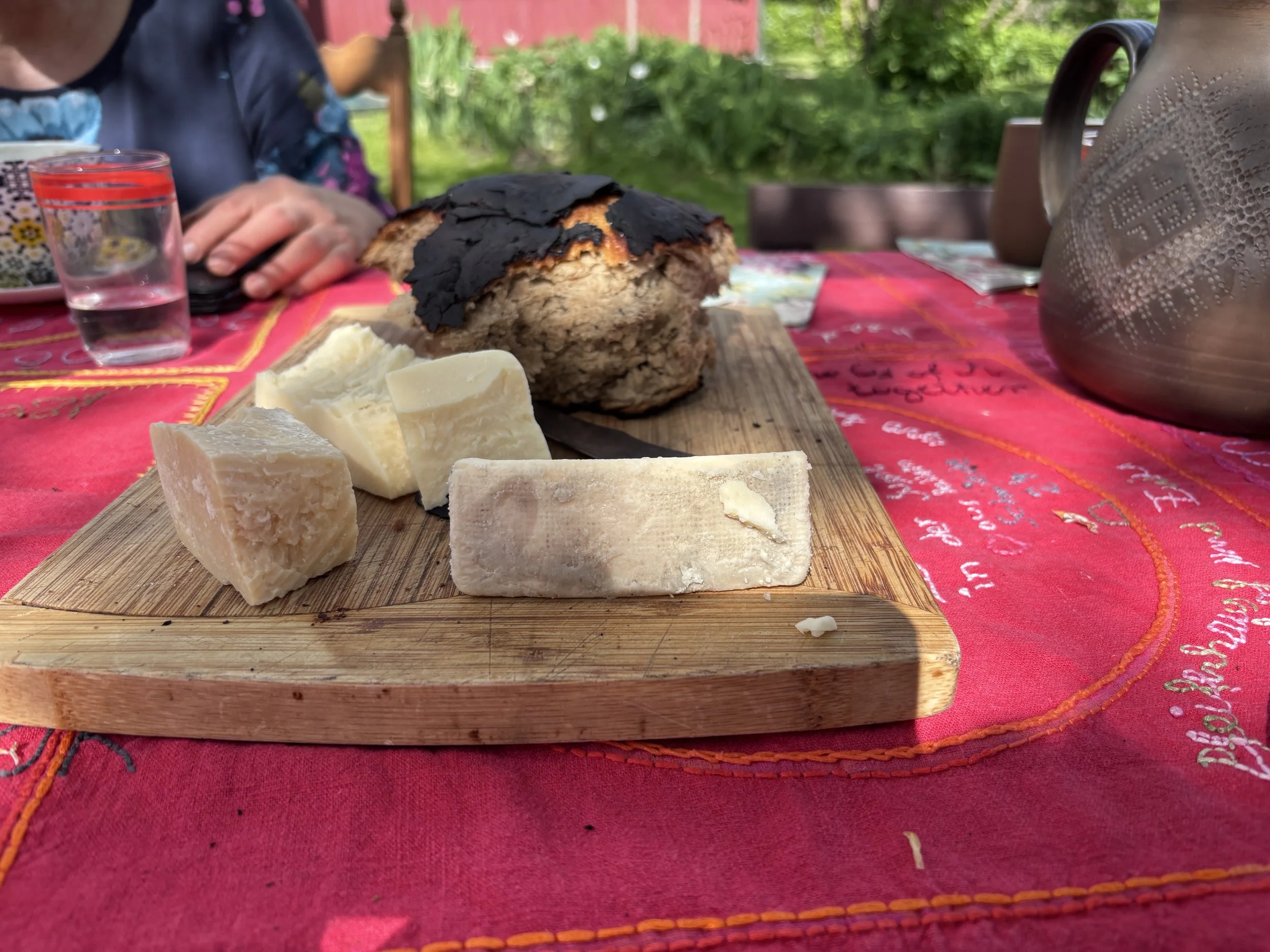
Hospitality, unsurprisingly, lies at the centre of LAUX. For brunch we enjoyed baked Brie with garlic, tomatoes and pears, accompanied by yarrow tea. Later we were joined by their mum Daiga served barley porridge with smoked ham, cheese and a variety of their own chutneys and jams. Dessert consisted of whipped cottage cheese with vanilla and generous helpings of rhubarb. Yum yum. Everything was utterly delicious.
Among the many practical tips gathered during the day was one particularly memorable piece of advice: wrap sheep's wool around newly planted trees and plant daffodil bulbs nearby to deter rodents and other animals.
Thank you, Marta, Madara and their family for such a delightful day. More than anything, what remains with me is the sense that at LAUX food, hospitality, heritage and landscape are not separate activities but part of one larger whole. In quietly cultivating the land, they are also cultivating belonging.