Anykščiai Inkubatorius – A good Place to Create
Some places simply make you breathe a little more slowly.
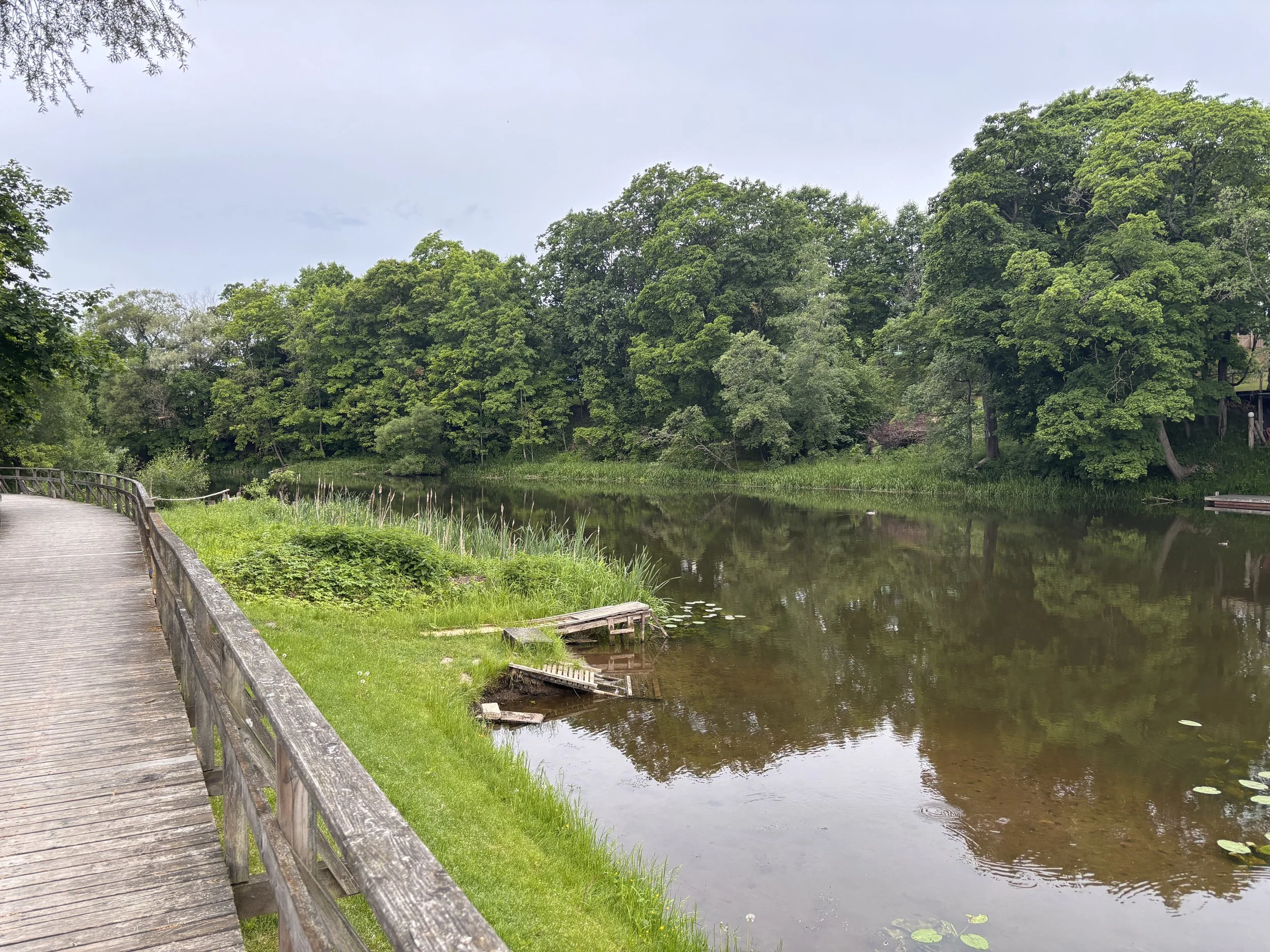
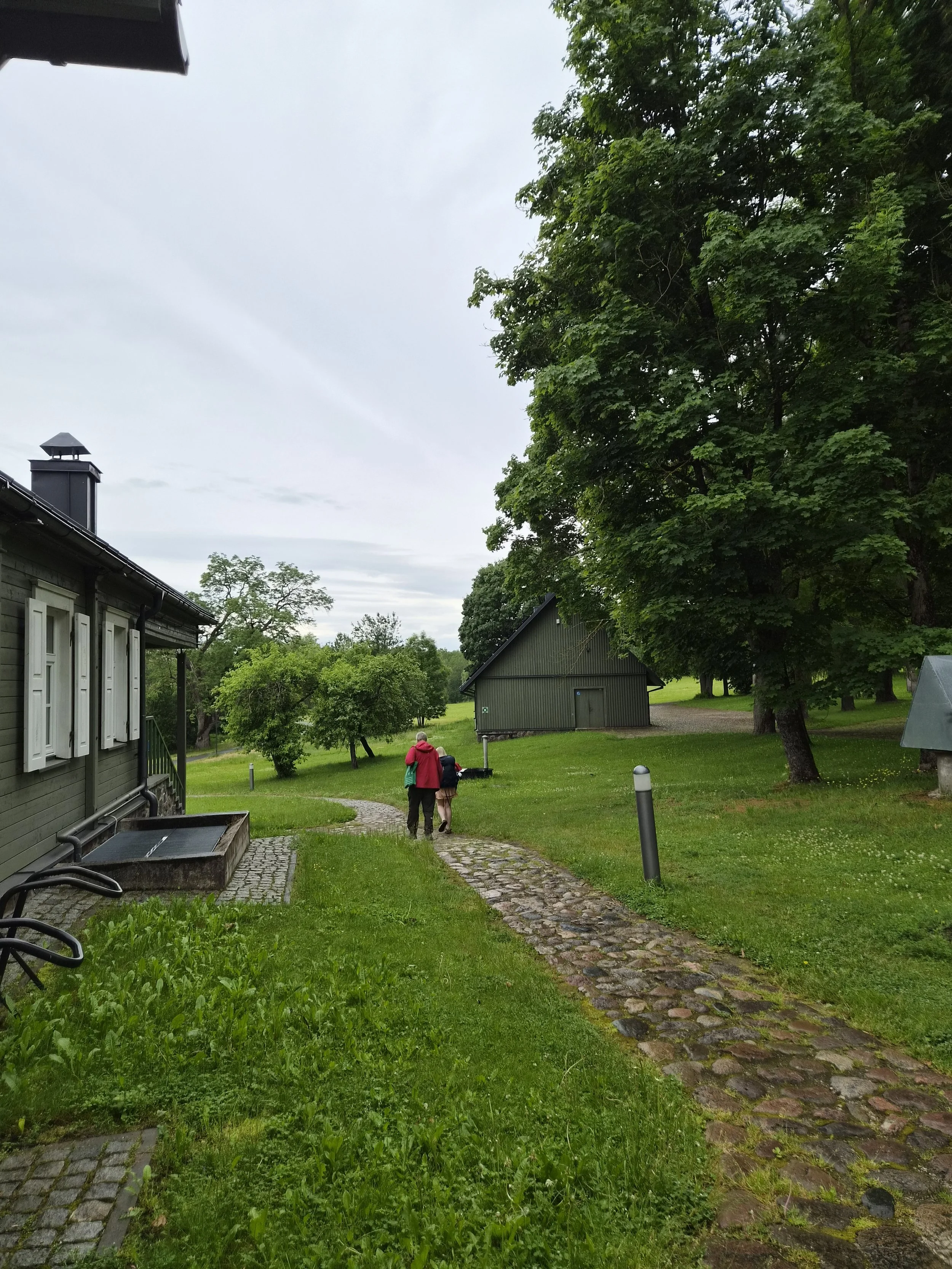
After a bus, a ferry, two trains and a bus coming from NIDA Art Colony, I arrived in Anykščiai, a small Lithuanian town of around 8,000 people, nestled along the gentle River Šventoji. My little riverside cabin looked across the water, and from the very beginning there was a sense that this was a place to linger rather than to rush through. Their slogan is Gera vieta gyventi – A good place to live. By the time I left, I realised it was much more than a slogan.
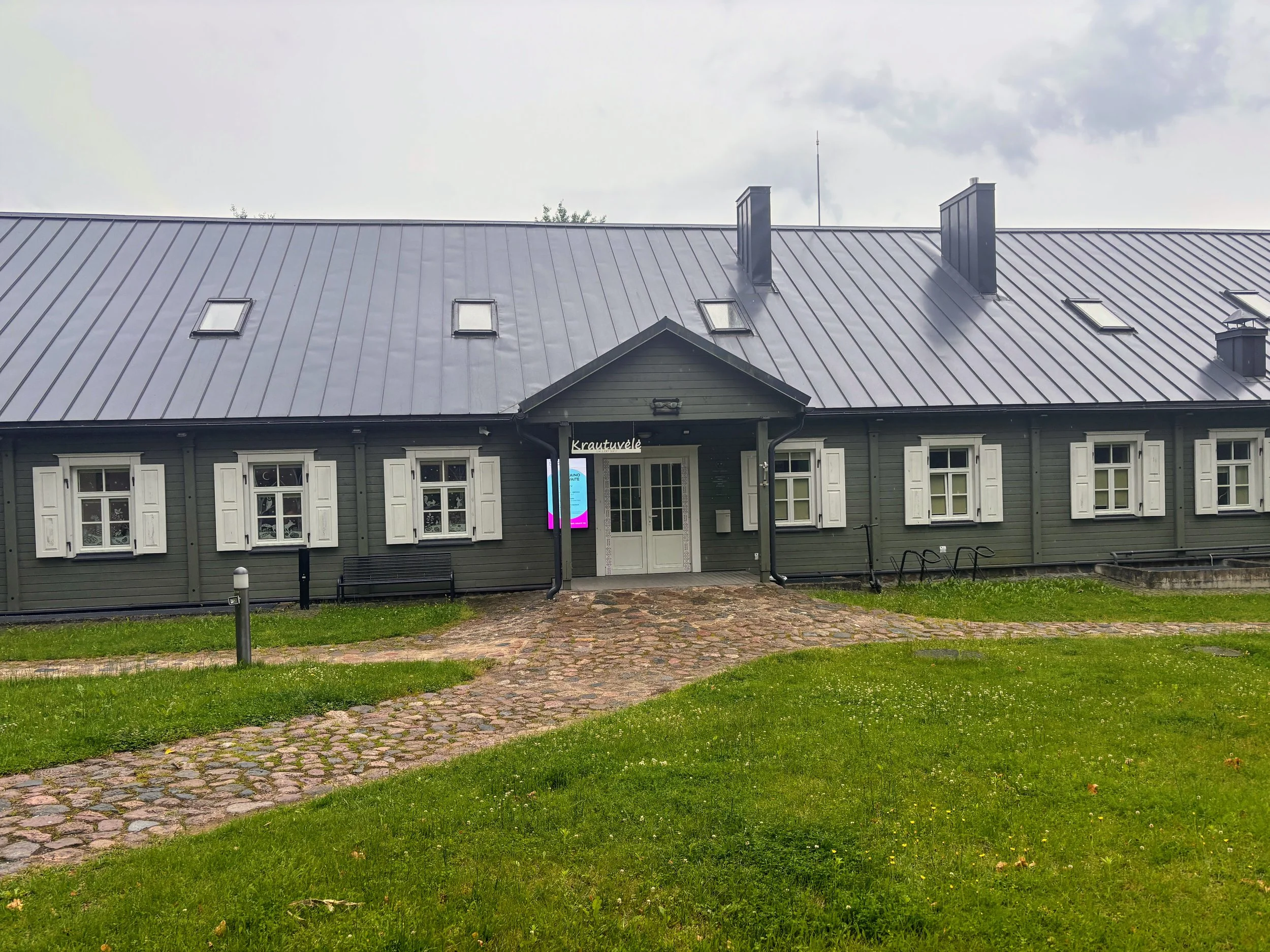
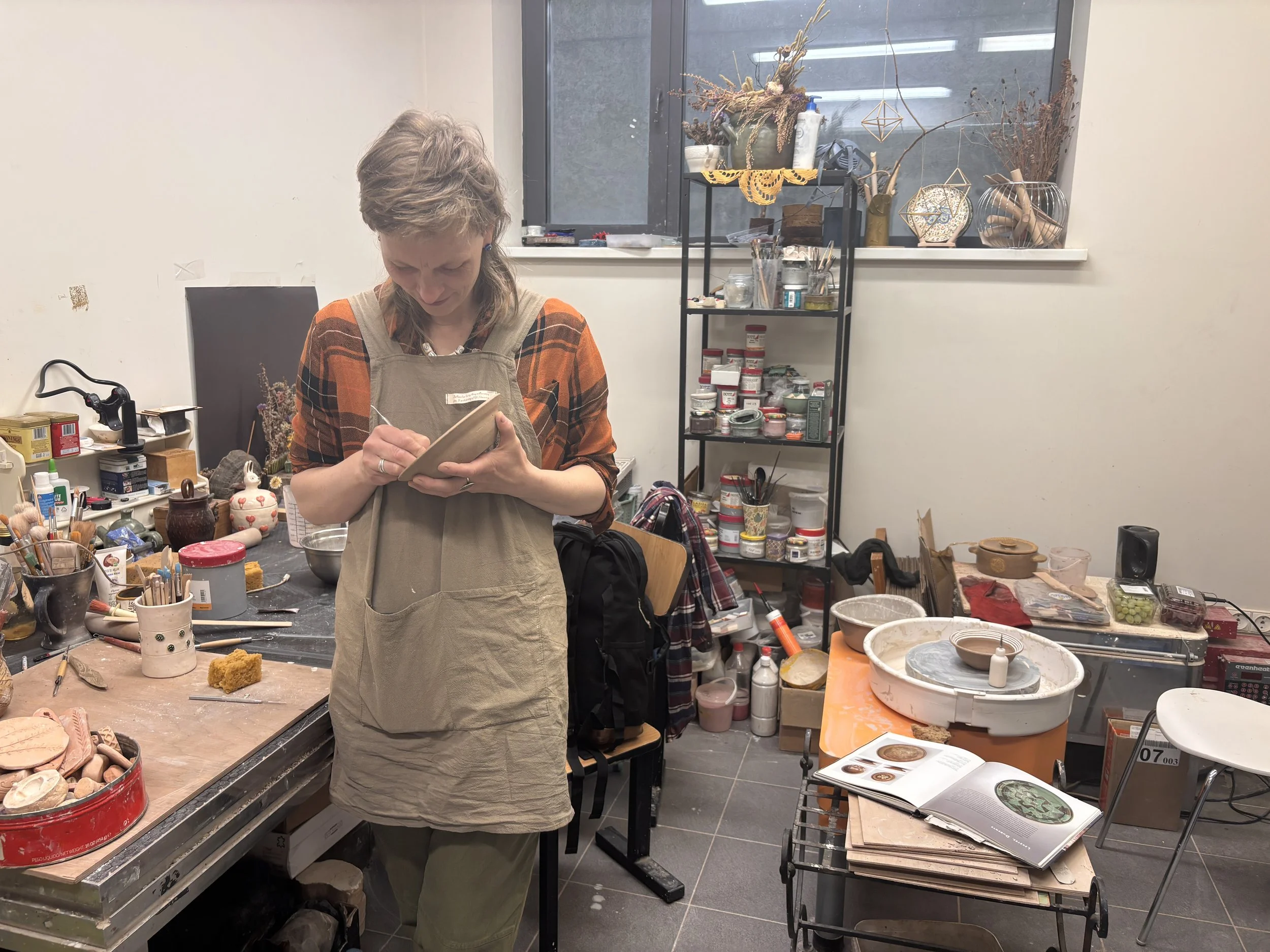
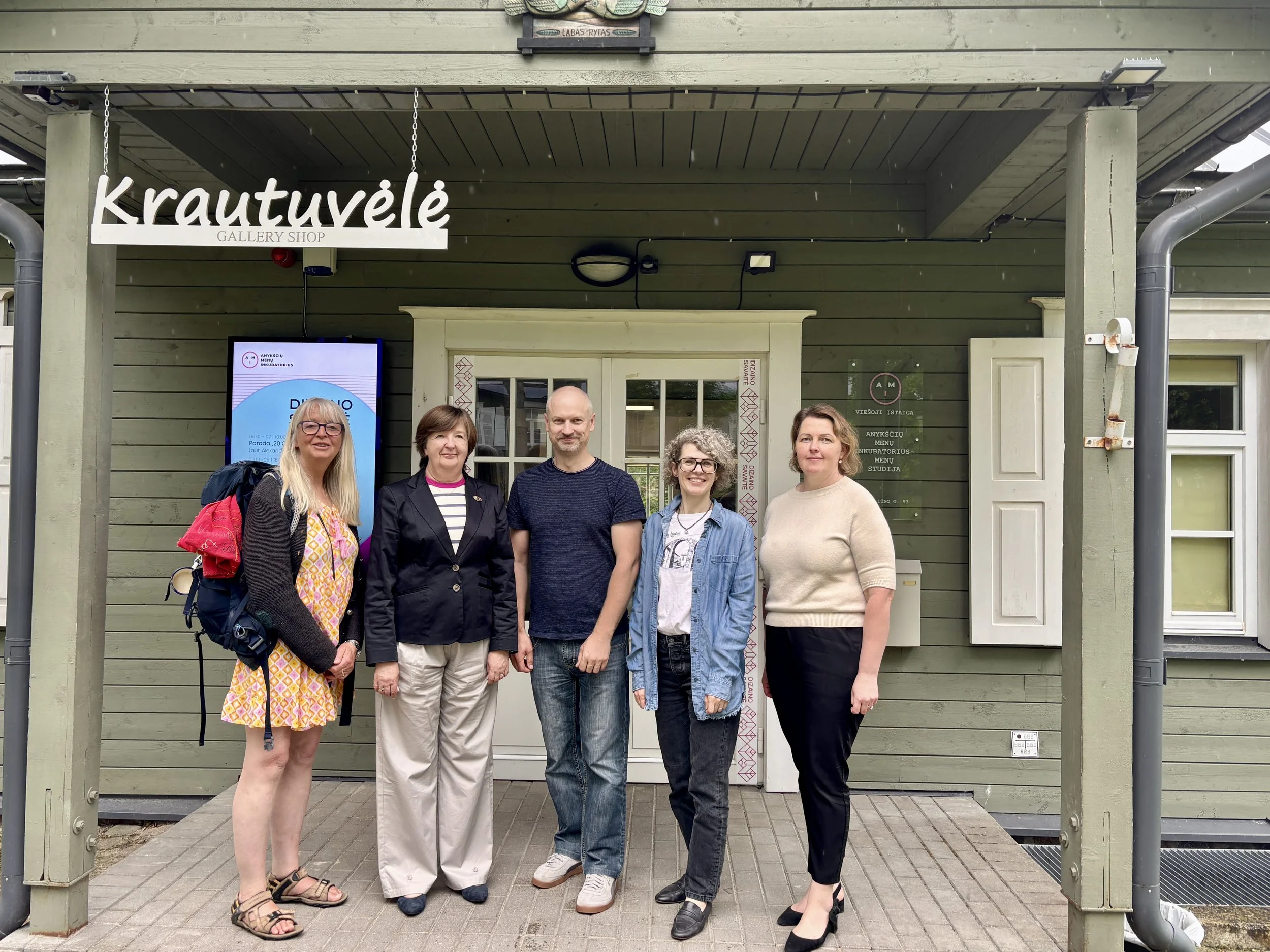
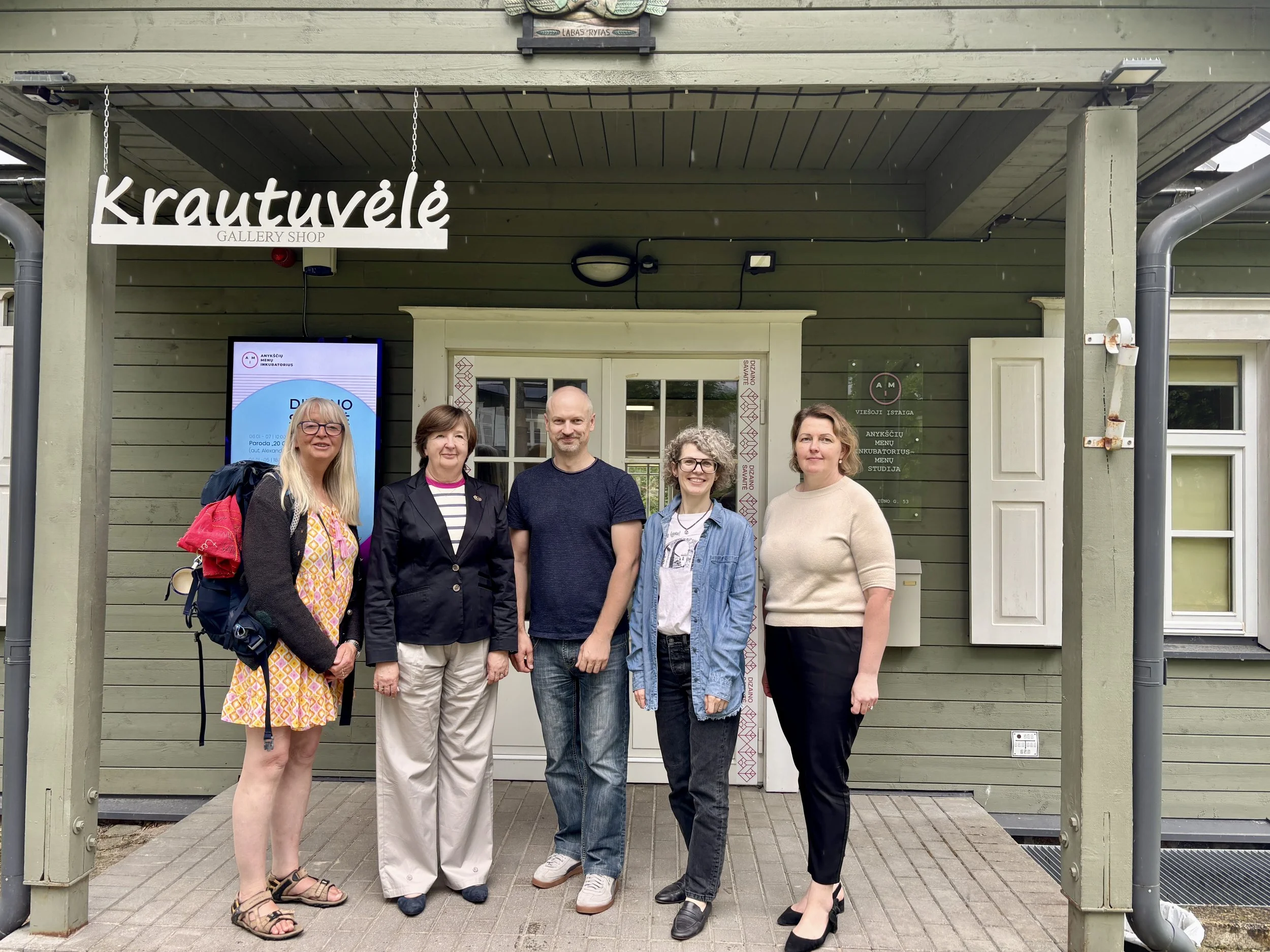
I had come to visit Inkubatorius, one of Lithuania's Creative Industry Incubators. The name itself sounds rather business-like, but what I found inside was a community of makers quietly getting on with what they love. Irmantas, who looks after the international connections, guided me through the workshops. Ceramicists, weavers, textile artists, candle makers, furniture designers and craftspeople each had their own purpose-built studio. There was no sense of competition. Instead, there was an atmosphere of concentration and generosity, of people helping one another to turn making into a livelihood.
The incubator itself is an intriguing model. Based in a wonderfully refurbished former school house, it is now supported through public investment and some Euro funding, giving emerging creative businesses the space and stability to establish themselves. It struck me how rarely we think of creativity as infrastructure. Roads, schools and hospitals are accepted as essential. Here, studios are treated with the same seriousness. The message seems simple: making matters.
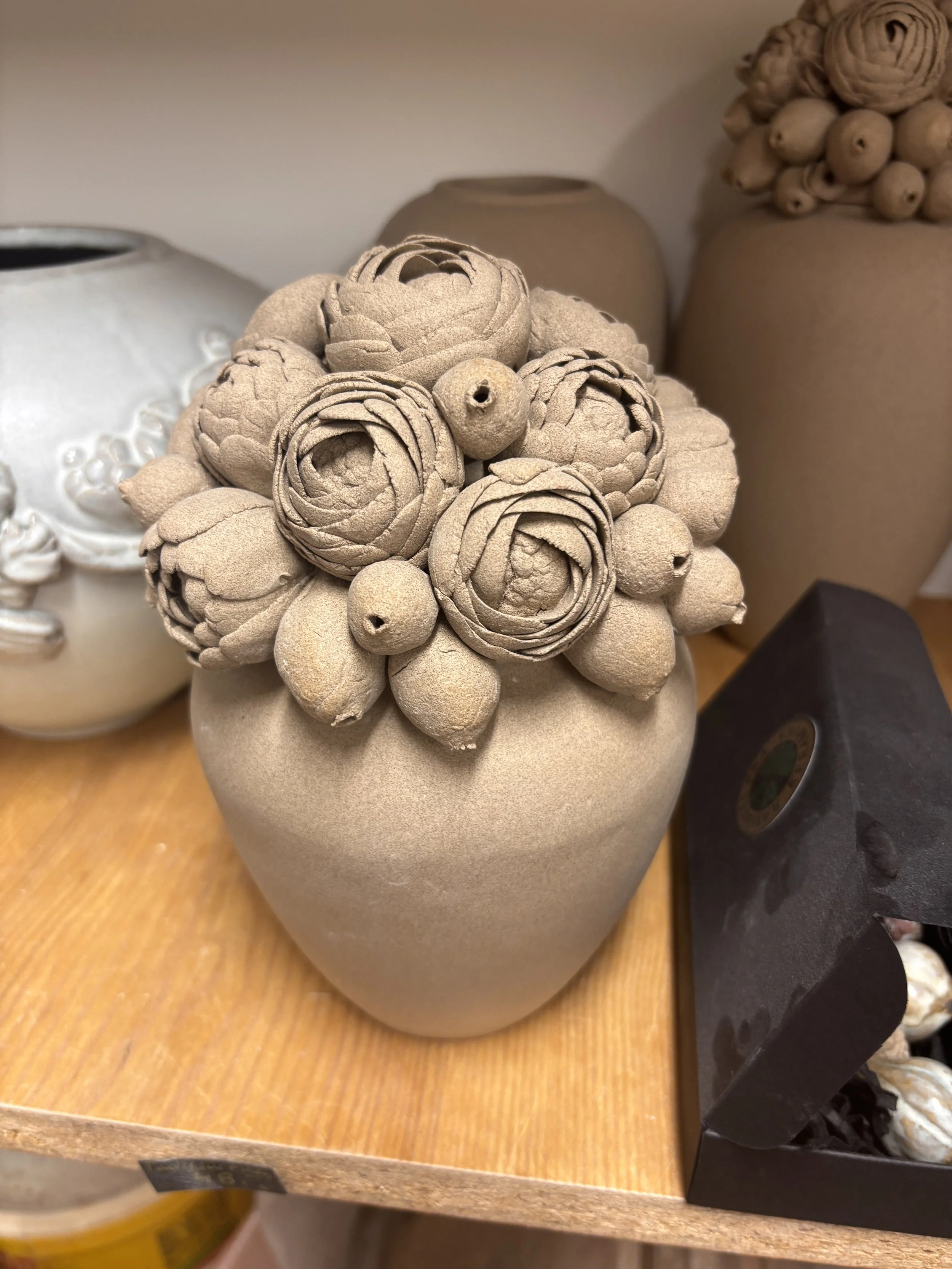
I found myself lingering in the gallery and small shop, admiring objects that carried the fingerprints of the people who had made them. I couldn't resist buying two beautifully marbled ceramic bowls, their swirling clays reminding me of the river flowing outside. Every morning they now brighten my breakfast, turning an ordinary bowl of müsli into a small reminder of my far too short stay in Anykščiai and with its lovely and enthusiastic Inkubator workers.
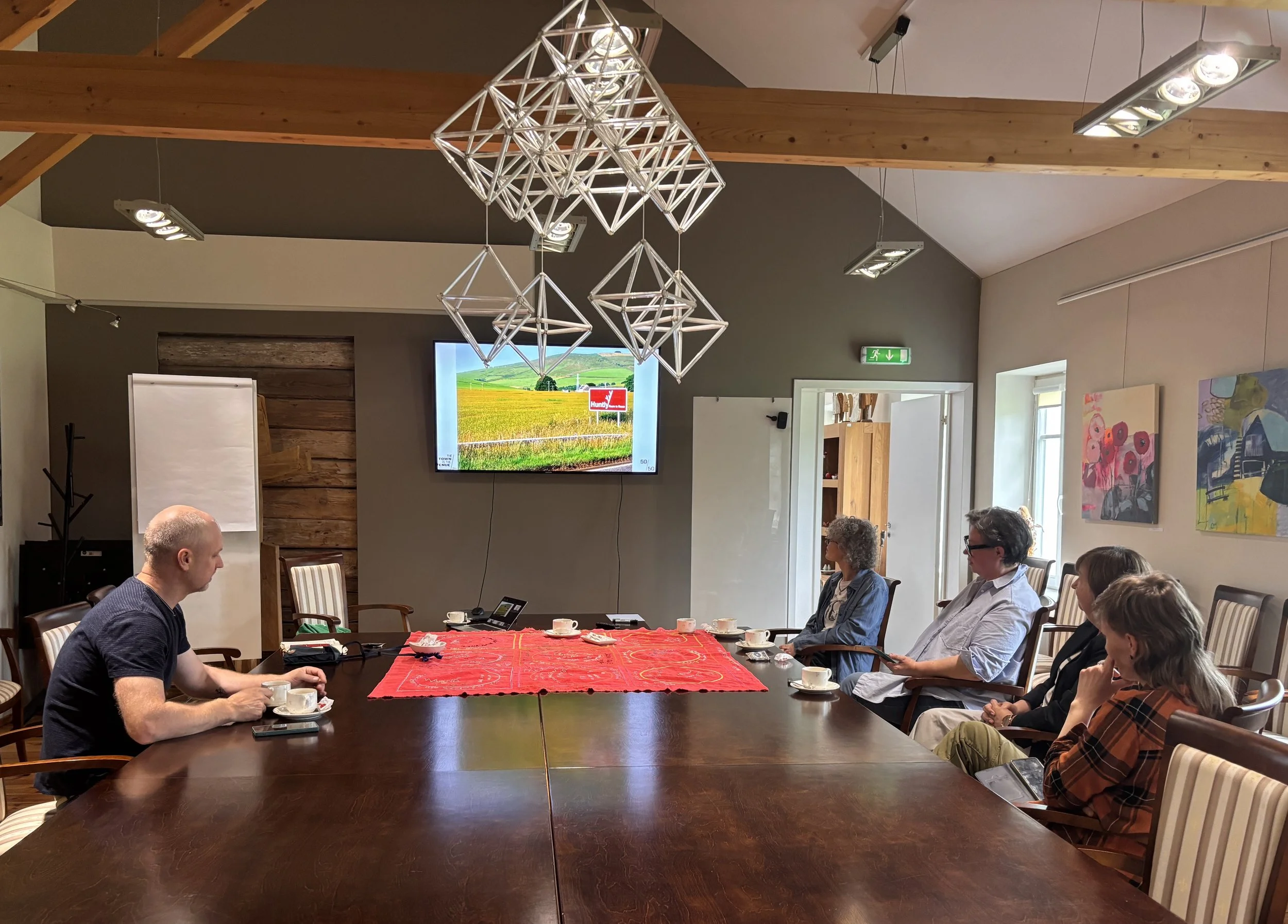
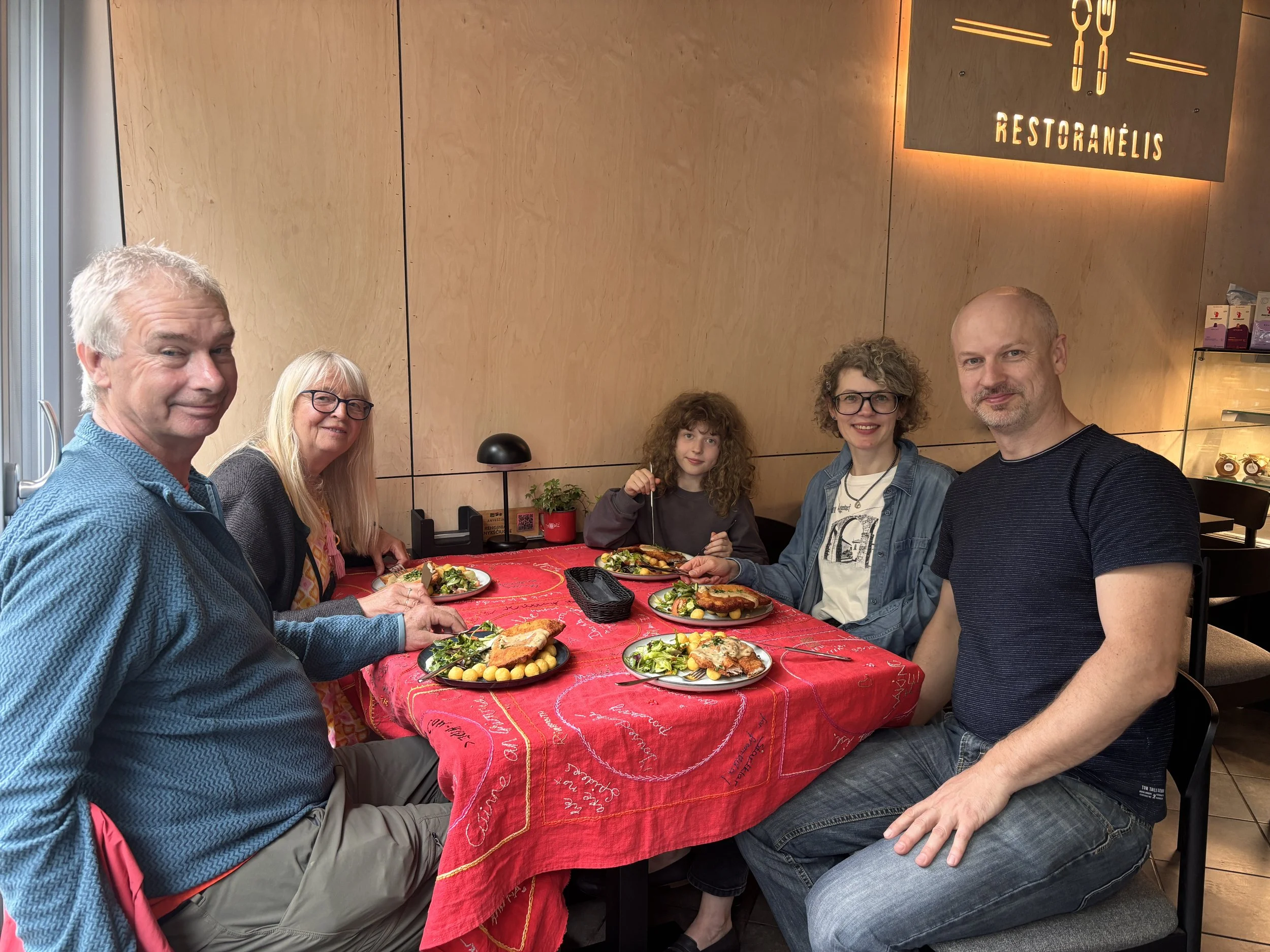
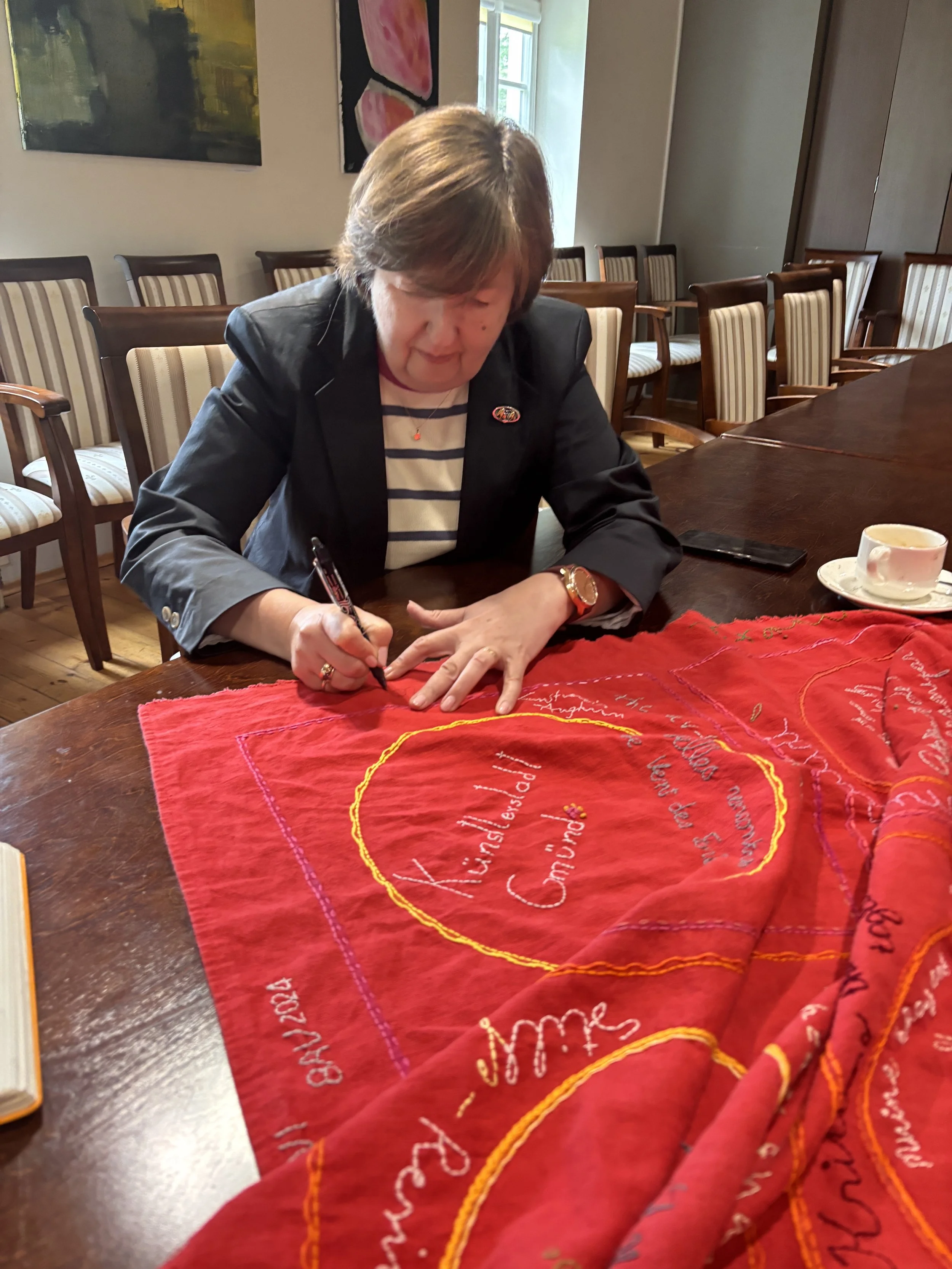
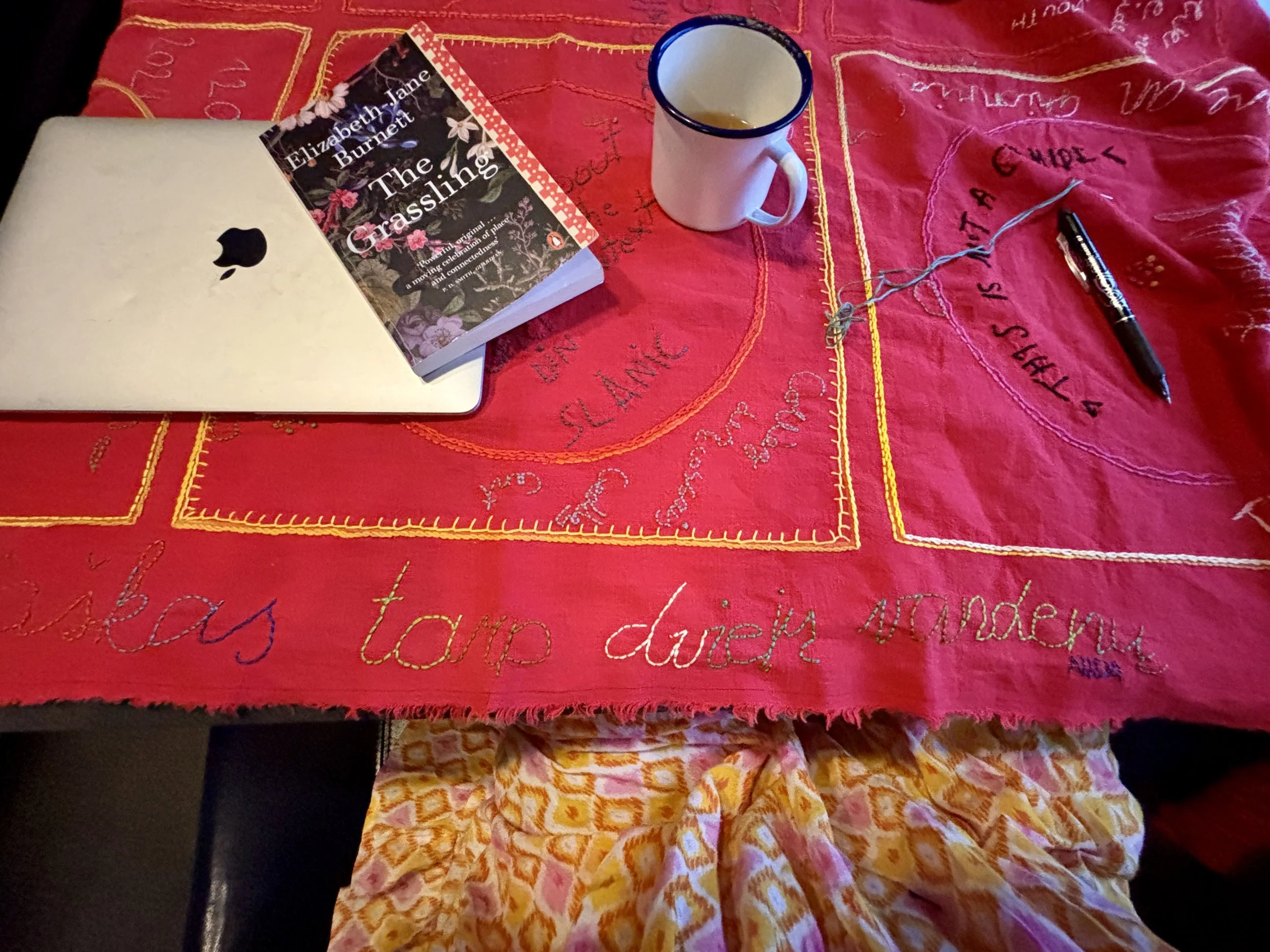
Over coffee, we gathered around my familiar red tablecloth. As so often on this journey, the cloth became less an artwork than an invitation to talk. I shared stories of The Town is the Venue, of walking as an artistic practice, and of the many rural communities I had visited across Europe. What followed was not so much a presentation as an exchange. There were thoughtful questions, comparisons with Lithuania, conversations about how artists relate to the places in which they live and work.
We talked about the similarities and differences between rural places across Europe and the role culture plays within them. I asked how they felt the local community related to the incubator. Like so many organisations I have visited, they felt it could be better. They were really open about this saying, that there was still work to do. We found ourselves wondering why this gap persists, and what might help artists and local communities become more closely connected.
Again and again during this Intertale journey I have encountered the same question. How can contemporary artists become part of rural life rather than simply visit it? Inkubatorius is exploring this too. They are developing international connections and hope to establish artist residencies. Like many places I have visited, they spoke about the mixed perceptions local people sometimes have of artists. It is a familiar tension. Yet the determination to build bridges rather than accept distance felt both patient and hopeful.
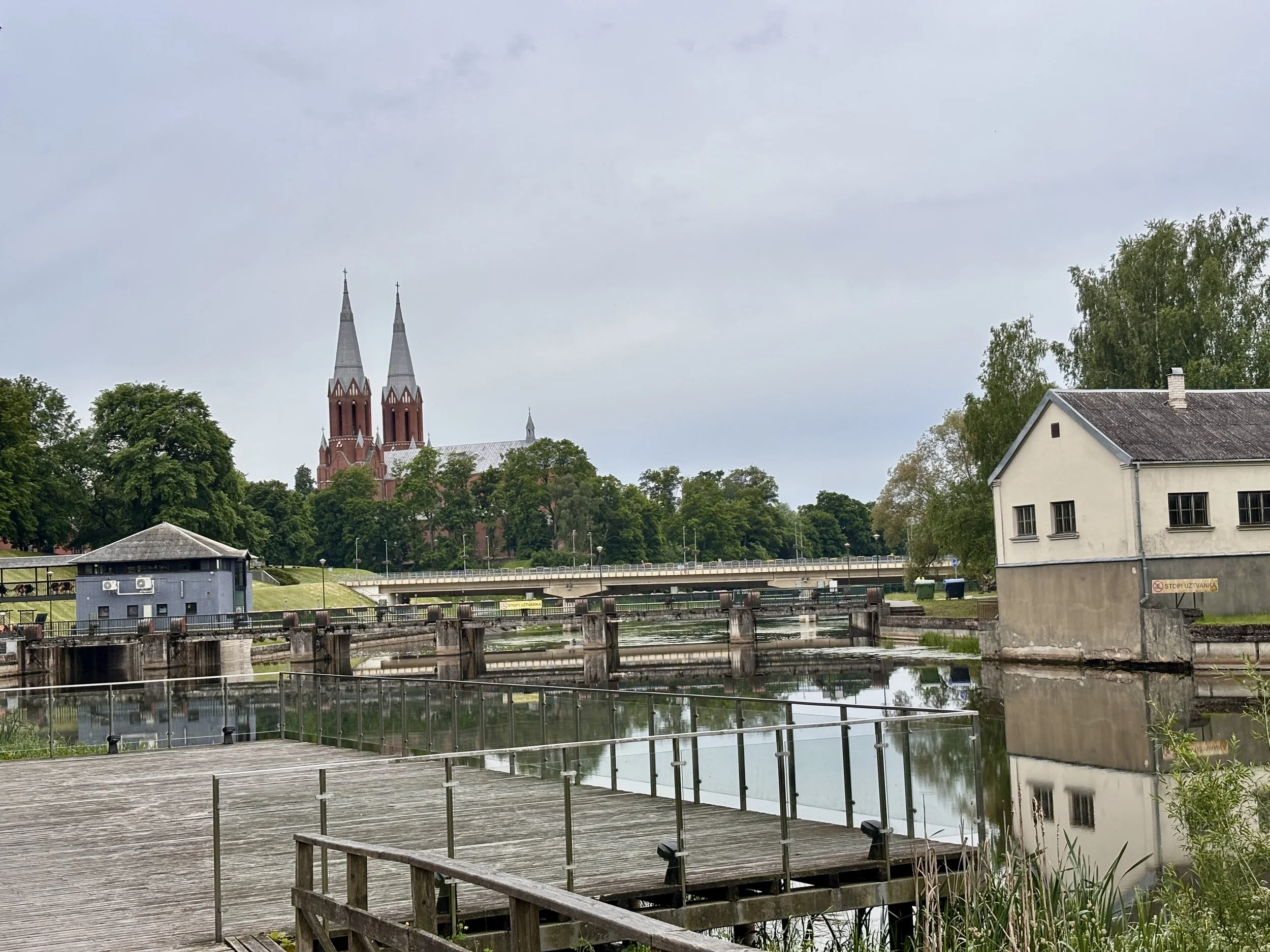
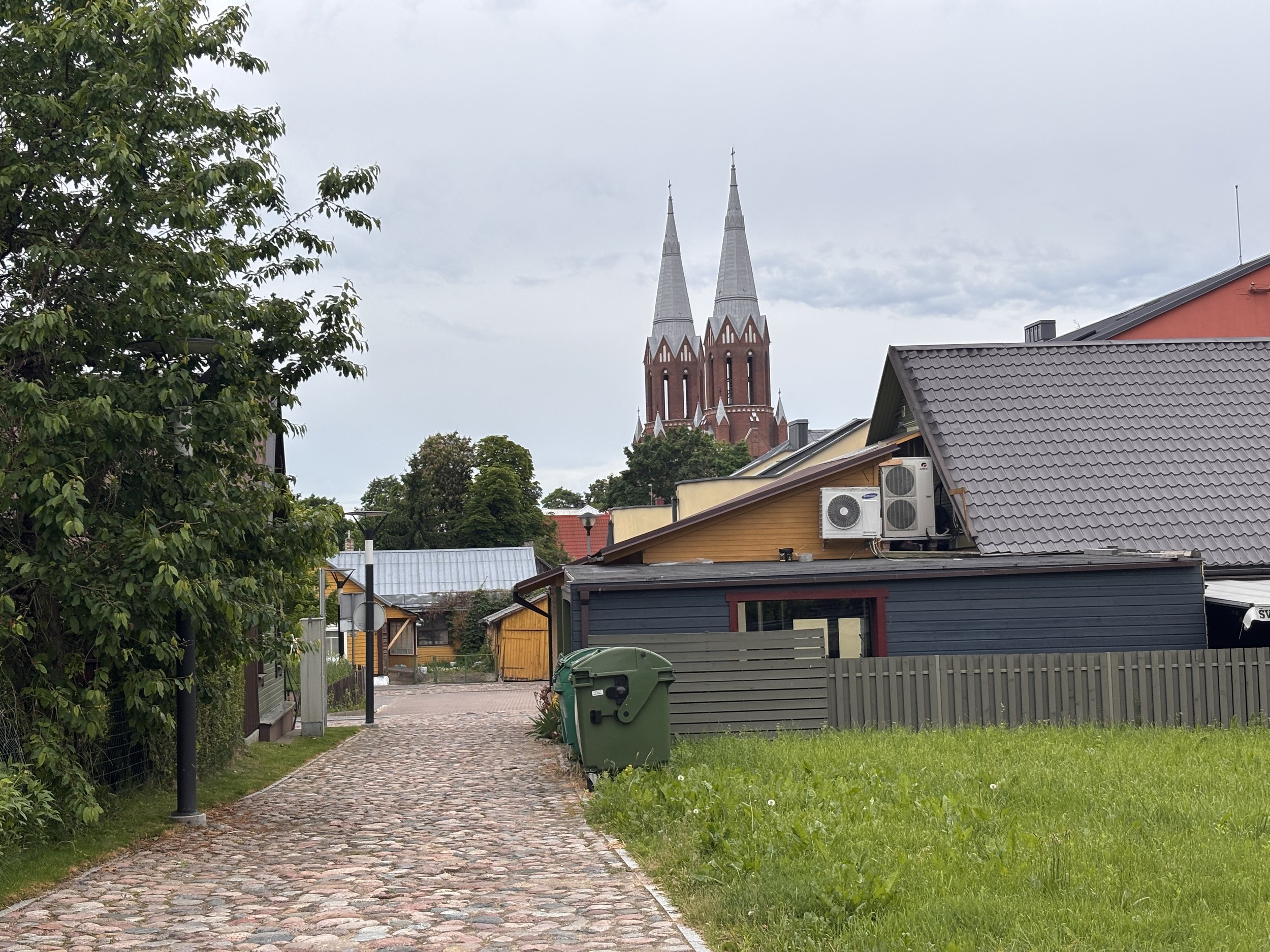
The conversation wandered beyond the studios. Anykščiai proudly celebrates itself as a town of writers. The magnificent spire of St Matthew's Church rises above the rooftops, while nearby the celebrated Treetop Walking Path carries visitors through the forest canopy before opening towards wide views across the valley of the Šventoji. To connect with the town, creativity here does not stay inside buildings. Fashion shows have taken over the town square and even the treetop walkway. Festivals have celebrated wool, metal, paper, textiles and concrete. Art seems to spill naturally into everyday life.
One story stayed with me. Daiva, the director, arrived here in 1986 after completing her technological studies. During the Soviet period people were often assigned where they would live and work, unable to choose where their lives would unfold. It was such a simple remark, almost made in passing, but it quietly coloured everything I saw afterwards. Today's creative freedom sits alongside memories of a very different Lithuania.
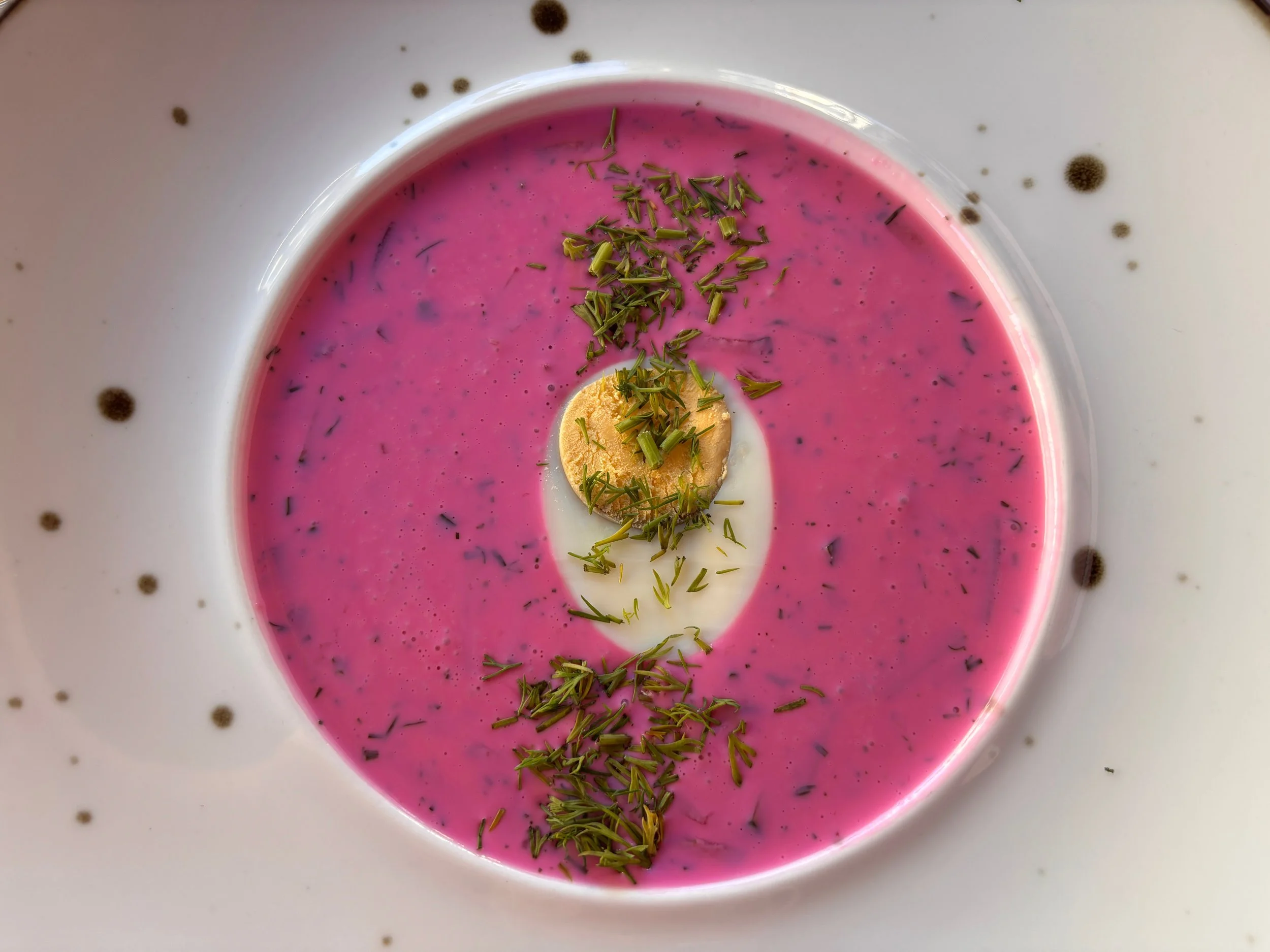
Lunch was as memorable as the conversations. Over cabbage soup and schnitzel we spoke about travelling, making, Europe and the curious ways that art allows strangers to become friends within the space of a single afternoon. These shared meals have become one of the recurring gifts of this journey. They remind me that hospitality is perhaps the first creative act any place can offer.
Before leaving, they gave me the small woven hemp basket that had caught my eye when I first walked into the shop. Every time I see it, I think of the river, the makers absorbed in their work, the conversations around my red tablecloth, and a town that surely lives up to its own words.
Gera vieta kurti.
A good place to create.